
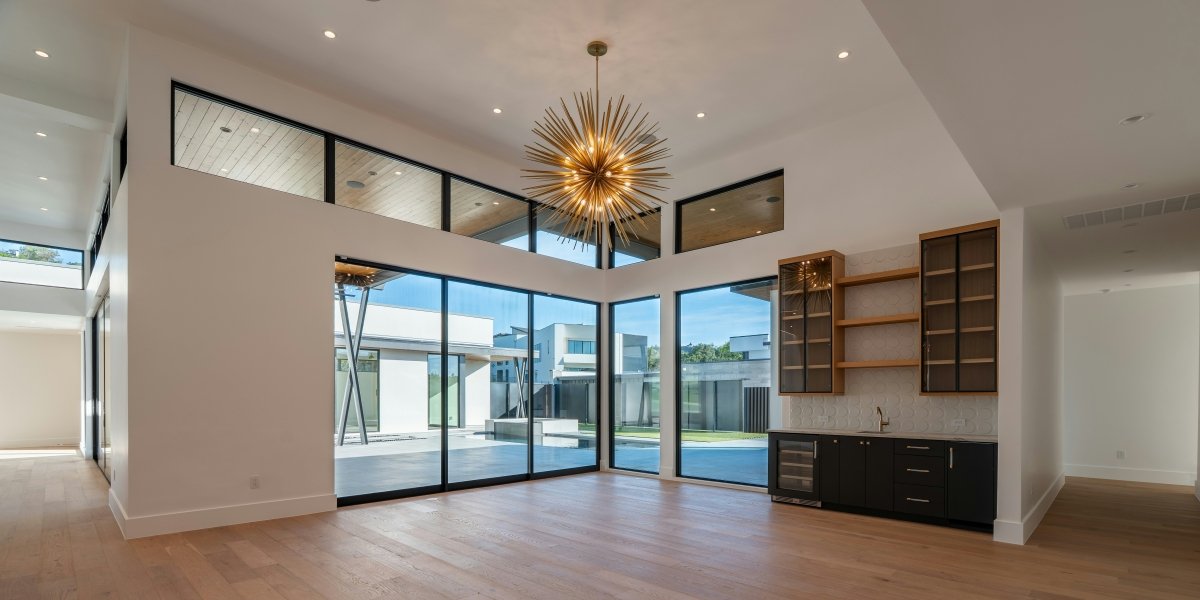
A well-installed hardwood floor should last decades, yet a surprising number get replaced far earlier than that, not because the installation failed, but because of maintenance habits that are common everywhere but happen to be especially damaging in San Diego’s specific mix of sun, dryness, and occasional coastal humidity. Understanding what actually wears down wood flooring in San Diego faster than it should is mostly a matter of a few counterintuitive details most homeowners never get told at the point of purchase.
Direct Sun Exposure Does More Damage Than Most People Expect
Southern California homes tend to be built around natural light, with large windows, sliding glass doors, open floor plans that let sun move across a room throughout the day. That’s a design asset for almost everything except wood flooring, which is prone to visible color change (usually darkening, though some species lighten) under sustained UV exposure. Rooms with south- and west-facing windows see the most pronounced effect over time, often creating a noticeable color difference between sun-exposed and shaded areas of the same floor within just a few years. Simple mitigation (UV-filtering window film, rotating area rugs periodically, closing blinds during peak afternoon sun) meaningfully slows this without requiring any change to the floor itself.
The Humidity Swing Problem Is Real, Even Without Obvious Rain
San Diego doesn’t get dramatic weather most of the year, which paradoxically makes indoor humidity swings easier to ignore. A home without a humidity-controlled HVAC system can still see meaningful shifts between a humid coastal marine-layer stretch and a dry Santa Ana wind event, sometimes within the same week. Those swings cause wood to expand and contract at a micro level that, over years, contributes to gapping between boards or, less commonly, cupping. A basic indoor hygrometer (inexpensive and simple to use) lets a homeowner actually track this rather than guessing, and maintaining indoor relative humidity in a moderate, stable range is one of the single most effective things a homeowner can do to extend a hardwood floor’s lifespan.
Cleaning Habits That Quietly Cause Damage
A few cleaning mistakes show up repeatedly in wood flooring wear patterns:
• Steam mops are popular for tile and vinyl but actively harmful to wood flooring, since they force moisture into seams between boards and can damage the finish over repeated use.
• Excess water during regular mopping pushes moisture into board seams even without a steam mop, so a barely damp microfiber approach is safer.
• Generic all-purpose cleaners often contain oils, waxes, or ammonia-based ingredients that build up residue on a wood floor’s finish over time, leaving it duller and harder to maintain.
• Skipping felt pads under furniture lets a dining chair or barstool dragged across an unprotected floor cause fine scratching that accumulates faster than most homeowners notice day to day.
None of these mistakes cause dramatic, immediate damage, which is exactly why they’re so common. The cumulative effect over several years is what eventually shows up as a floor that looks prematurely worn despite reasonable overall care.
Entryways and Kitchens Need Different Rules Than the Rest of the House
Every room isn’t equally at risk. Entryways see the most grit and moisture tracked in from outside. Sand and dirt act as light abrasive on a wood finish with every footstep, which is part of why a simple walk-off mat at every exterior entry point does more for long-term floor appearance than most people assume. Kitchens face a different risk profile: spills near sinks and dishwashers, and a higher baseline moisture environment generally. A flooring consultation that accounts for room-specific use (rather than treating a whole-home wood flooring project identically room to room) tends to produce better long-term outcomes, including recommending engineered hardwood or an alternate material specifically for higher-moisture zones even when solid wood is used elsewhere in the home.
What a Good Flooring Partner Should Cover at the Point of Sale
Maintenance guidance is often treated as an afterthought handed over after installation, if it’s covered at all. Floor Store & Design Center, a family-owned flooring store and contractor serving San Diego, builds its process around a design consultation stage, led by ownership with more than 20 years of flooring industry experience, that’s positioned to flag these room-specific and climate-specific considerations before installation, rather than leaving a homeowner to discover them the hard way years later.
The Real Lesson: Most Damage Is Preventable, Not Inevitable
Wood flooring’s reputation for being high-maintenance is mostly undeserved when the actual failure points are understood. UV exposure, humidity swings, cleaning method, and room-specific risk are all manageable with a handful of consistent habits, none of which require special products or significant ongoing effort. The floors that end up needing early replacement are rarely victims of bad luck; they’re usually the ones where nobody explained these specifics at the start.
Floor Store & Design Center
165 S El Camino Real Ste A, Encinitas, CA 92024, United States
+1 760-274-0213