

For generations, bankers have sized up borrowers with a framework known as the Five Cs of Credit: character, capacity, capital, collateral, and conditions. Technology has changed how quickly those questions get answered, but it hasn’t changed the questions.
What has changed is the weight given to each. A fast online lender reading your bank data doesn’t care about the same details as a loan committee reviewing three years of tax returns. Here’s how each of the five works in both worlds, and how to satisfy it when you’ve got only a day.
C1: Character
The traditional view: Is this someone who pays their debts? A banker relies on personal credit reports, references, industry experience, and sometimes a long-standing relationship.
The fast-lending view: Character gets inferred from data. Algorithms and reviewers look at credit history, bankruptcy and judgment records, business registration, identity verification, and consistency across documents.
How to satisfy it today:
- Check that your legal name, EIN, and bank account all match
- Confirm that your business is in good standing with the state
- Disclose every existing debt, including advances
- Explain any past credit problem briefly and factually
- Answer the verification call promptly
Character is easily damaged by inconsistency. An application stating there’s no other debt, attached to statements showing daily debits to another funder, ends the conversation quickly. Some platforms publish a general explanation of how they evaluate files, and reading about the Fundivi cash-flow underwriting approach offers one example of what’s considered.
C2: Capacity
The traditional view: Capacity means your ability to repay from cash flow, commonly measured by debt service coverage. A bank divides the cash available for debt by your total debt payments and often looks for a ratio of 1.15 to 1.25 or better.
The fast-lending view: Capacity is estimated from your statements: average monthly deposits, deposit frequency, negative-balance days, average balance, and existing daily or weekly payments.
Capacity is the most important C for one-day funding.
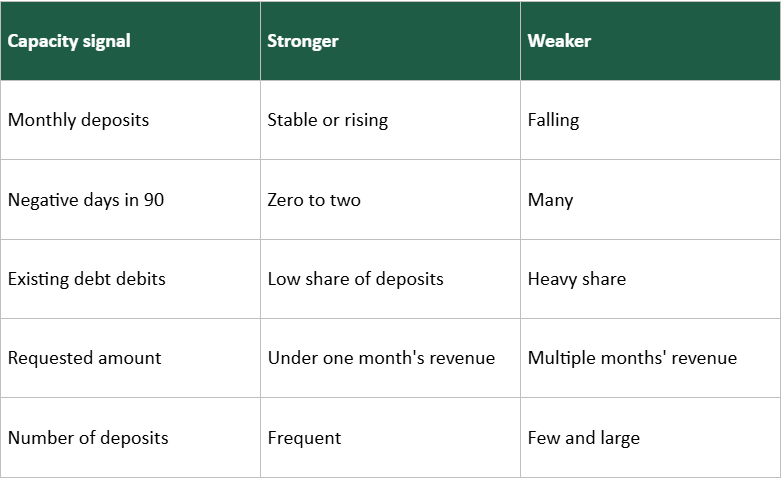
How to satisfy it today: Request an amount your deposits can plainly support. If you’re uncertain, compute the new payment and test it against your weakest recent month. Businesses with strong day-to-day cash flow can look at this overview of top working capital loans for small firms to compare how capacity is reflected in different product types.
C3: Capital
The traditional view: How much of your own money is invested? A lender feels more secure when owners have something to lose. SBA and bank loans frequently require an equity injection, particularly for acquisitions and startups.
The fast-lending view: Formal capital requirements are rarely applied. Reviewers may instead notice whether the business retains a cash cushion or whether every dollar is withdrawn as soon as it arrives.
How to satisfy it today:
- Avoid large owner withdrawals right before you apply
- Keep a positive average daily balance
- Mention any money you’re contributing toward the project
- Be prepared to explain unusually large distributions
Don’t confuse capital with a temporary deposit. Moving money into the account for a few days just to raise the balance won’t impress a reviewer and could raise serious questions.
C4: Collateral
The traditional view: What assets could the lender look to if the loan goes bad? Banks may take real estate, equipment, inventory, or receivables, each requiring valuation.
The fast-lending view: Usually no appraisal is involved, which is a major reason for the speed. In its place, you’ll typically find a personal guarantee and a UCC filing covering business assets generally.
How to satisfy it today:
- Search your UCC records for existing or outdated liens
- Request termination of filings on debts you’ve paid off
- Understand what any blanket lien would cover
- Read the personal guarantee, and find out if it’s limited or unlimited
“Unsecured” can be misleading. A loan without specific collateral can still give the lender wide rights against your business and, through a guarantee, against you personally.
C5: Conditions
The traditional view: What’s the purpose of the loan, and what’s happening in your industry and the broader economy?
The fast-lending view: Conditions appear as restricted-industry lists, seasonal adjustments, geographic limits, and a basic review of what the money is for. Pricing may also shift with the provider’s own cost of capital.
How to satisfy it today:
- Confirm your industry isn’t restricted before applying
- State a specific purpose
- Explain seasonality with prior-year statements
- Mention any contract or event supporting the request
A good purpose statement reads like this: “We need $35,000 to buy inventory for a signed order from a regional chain, with payment due in 45 days.” Compare that with “general expenses.” Credit-based eligibility is one condition providers revise from time to time, as this StreetInsider notice on credit score eligibility shows, but the other Cs still shape what a business is offered.
A Sixth C: Clock
Speed is outside the classic framework, but it’s central to this article. A strong file can still miss a one-day window. To keep to the clock:
- Gather complete PDFs of three to six months of statements
- Scan owner IDs in advance
- Prepare your formation documents and EIN letter
- Create a list of current debts and payments
- Apply early on a weekday
- Stay reachable until funding
- Ask whether funds move by wire or ACH, and what the cutoff is
Approval is always at the provider’s discretion. The goal here is to remove delays that you can control.
How the Five Cs Change by Lender Type
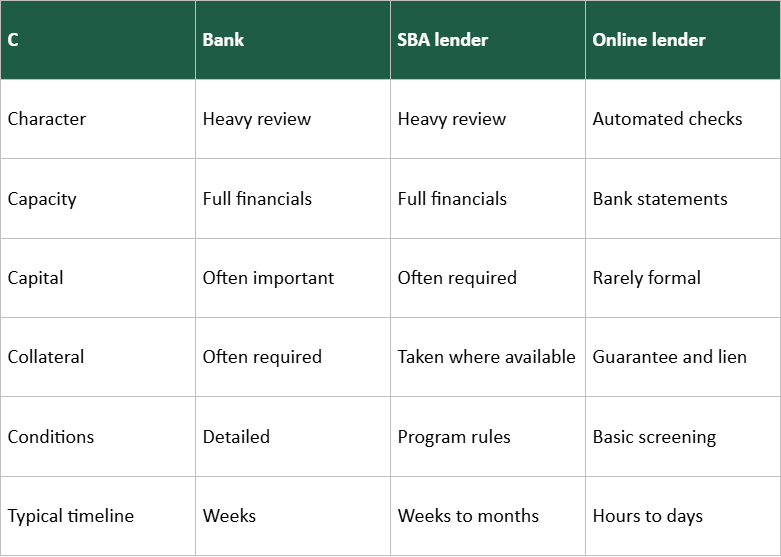
If you’re strong on all five, you’re probably paying too much for fast money. Get a bank or SBA quote, even if you use a quicker product for your immediate need and refinance later.
Weighing the Offers
Qualifying gets you an offer. Whether to accept it is a separate question. Look at net proceeds, total repayment, payment frequency, estimated APR, early payoff terms, and the guarantee. Comparison sites such as the BestMCALoans.com small business loan pages can be a helpful addition to your research, as long as you check how the site gets paid.
Finally, consider what a repayment says about the future. A loan that’s paid on schedule strengthens your standing for the next request. One that strains your cash can damage your relationships with vendors, employees, and lenders. That’s the reason the most important question remains the oldest one: how will this money be repaid?
Putting the Cs in Order
When time is short, work on them in this sequence: fix anything that affects character, since mismatched records stop a file outright; check capacity next, and reduce the amount if needed; then review liens under collateral. Capital and conditions usually take only a few minutes to address. This order deals first with the problems most likely to end an application.
Frequently Asked Questions
Which of the Five Cs matters most?
For fast lenders, capacity, as seen in recent cash flow. Banks weigh all five more evenly.
Can strong capacity make up for poor credit?
To a degree, particularly with online providers. Expect higher pricing and possibly lower limits.
Do I need collateral for a small business loan?
Not always, but expect a personal guarantee and possibly a general lien on assets.
How long must my business have been open?
Online lenders often want at least several months. Banks and SBA lenders typically prefer two years.
Can I still qualify if my industry is seasonal?
Yes. Provide a full year of statements, if you can, and explain the pattern.
What if my spouse co-owns the business?
Lenders generally review all owners above a set threshold, and each may need to sign a guarantee.
Will the lender call my customers?
Generally not for standard loans. Factoring and some receivables products do involve customer contact.
What should I do if I’m declined?
Ask why, address that specific issue, and consider free counseling through an SBDC before you reapply.