The U.S. home services market is one of the most resilient segments of the economy. HVAC, plumbing, electrical, appliance repair, these trades don’t disappear during downturns. When systems fail, demand shows up.
Yet despite strong demand, many small and mid-sized service companies struggle to grow. Not because they lack work, but because growth itself exposes weaknesses: inconsistent hiring, uneven quality, weak sales processes, and owners stuck inside daily operations instead of running a business.
Fuse Service CSN was created to address that gap, not as a single product or “school,” but as an ecosystem designed to help service companies move from survival mode to structured growth.
A Fragmented Industry With Strong Fundamentals
Home services are fundamentally local, labor-driven, and operationally complex. Most businesses start small: a technician, a truck, and a phone. Early success depends on skill and hustle. But once demand increases, chaos often follows.
Common issues repeat across markets:
- Technicians hired without clear standards
- Sales conversations are handled inconsistently
- Pricing decisions are made emotionally instead of financially
- Owners carrying operational risk personally
- High employee turnover due to a lack of development paths
The industry isn’t broken, but it is fragmented. And fragmentation makes it hard for companies to scale responsibly.
Why “More Work” Isn’t The Answer
For many owners, growth feels like a paradox. Marketing brings in more calls, but profit doesn’t rise proportionally. Teams feel stretched. Quality slips. Turnover increases.
At that point, the problem is no longer demand; it’s infrastructure.
Fuse Service CSN approaches this from a different angle. Instead of pushing volume, it focuses on building systems around people: how they are trained, supported, and connected.
The CSN Model: Club, School, Network
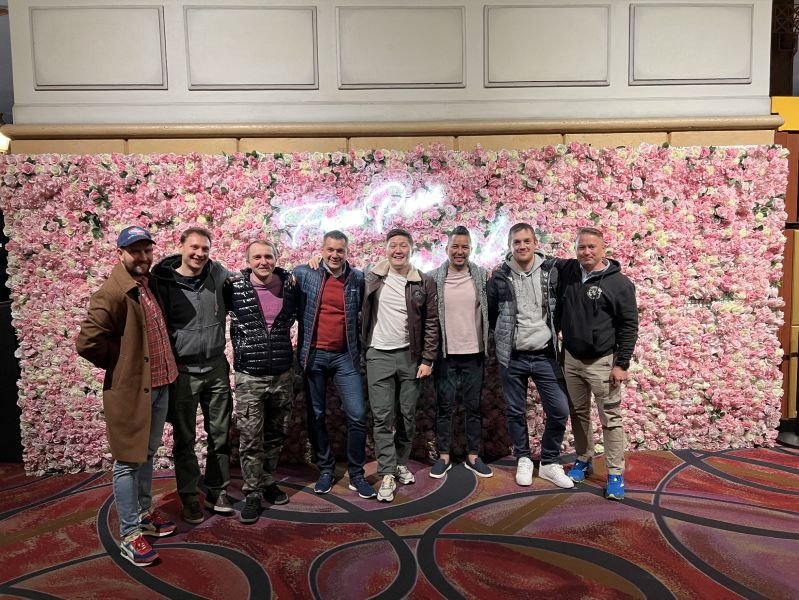
Fuse Service CSN is structured as an ecosystem with three interconnected components: Club, School, and Network. Each addresses a different constraint that limits growth in home services.
School focuses on education, but not in the abstract sense. Training is built around real operational needs: technician onboarding, service standards, diagnostics, customer communication, sales fundamentals, and financial literacy for owners. The goal isn’t certification for its own sake, but consistency in the field.
Club supports business owners and managers. It’s a space for structured peer learning around hiring, compensation models, pricing, KPIs, and leadership. Owners don’t just learn theory, they compare notes with others facing the same decisions, in real markets, under real constraints.
Network connects companies, specialists, and teams into a shared operating environment. This is where adoption accelerates. When tools, standards, and language are shared across companies, implementation friction drops. What takes months alone often takes weeks together.
The power of CSN isn’t in any single component. It’s in how they reinforce each other.
From Intuition To Process
One of the biggest shifts CSN encourages is moving away from intuition-based management.
Many trade businesses rely heavily on the owner’s personal judgment. That works early on—but it doesn’t scale. As teams grow, decisions need to be repeatable: how technicians are hired, how calls are handled, how quality is measured, how money flows through the business.
CSN doesn’t replace the owner’s experience. It turns it into a process.
That transition reduces costly mistakes in the field, improves sales conversion through clearer communication, and gives employees a clearer sense of expectations and growth.
Workforce Development As A Growth Lever
Labor remains the tightest constraint in home services. Skilled technicians are hard to find, and harder to keep.
Fuse Service CSN treats workforce development as core infrastructure, not an HR afterthought. Clear training paths, shared standards, and visible opportunities for advancement improve retention. When technicians see a future beyond “just jobs,” engagement rises.
For businesses, that stability translates directly into better customer outcomes and lower hiring costs.
Community As An Accelerator, Not A Perk
Community is often framed as a “nice to have.” In practice, it’s a speed multiplier.
When owners and managers can learn from peers who have already tested a solution, decision cycles shorten. When technicians share standards and language, field performance improves faster. When companies aren’t isolated, mistakes become less expensive.
This is one of the least discussed advantages of ecosystems like CSN: they compress learning curves.
Why This Matters For The Broader Economy
Home services are a cornerstone of the U.S. service economy. They provide stable jobs, local business ownership, and essential infrastructure for households and businesses alike.
Fuse Service CSN positions itself not as a marketing platform, but as a business accelerator for this segment, bridging workforce development, education, and operational maturity.
By helping small service companies professionalize without losing their independence, the model supports healthier growth at scale.
A Different Kind Of Partnership
From a network perspective, CSN isn’t about top-down control. It’s about shared tools, shared standards, and shared learning.
That’s what makes it a partnership model rather than a vendor relationship. Companies don’t just consume information; they contribute experience. The ecosystem grows stronger as participation increases.
Looking Forward
The home services market doesn’t need hype. It needs structure.
Fuse Service CSN reflects a broader shift happening across trades: from individual operators to connected, process-driven businesses. Not through consolidation, but through collaboration.
For an industry built on reliability and trust, such infrastructure may be the most scalable advantage of all.