
By: Travis McCallister
California has always had a complicated relationship with country music.
Drive through Bakersfield, and you can still feel the ghosts of honky-tonks where electric guitars pushed against Nashville refinement. Head south toward Los Angeles and the story changes again: country collides with rock, folk, pop, and whatever else happens to be drifting across the Pacific breeze. California country has rarely been interested in behaving itself.
That makes See Your Shadow’s “Another Saturday” an intriguing record to consider from the West Coast.
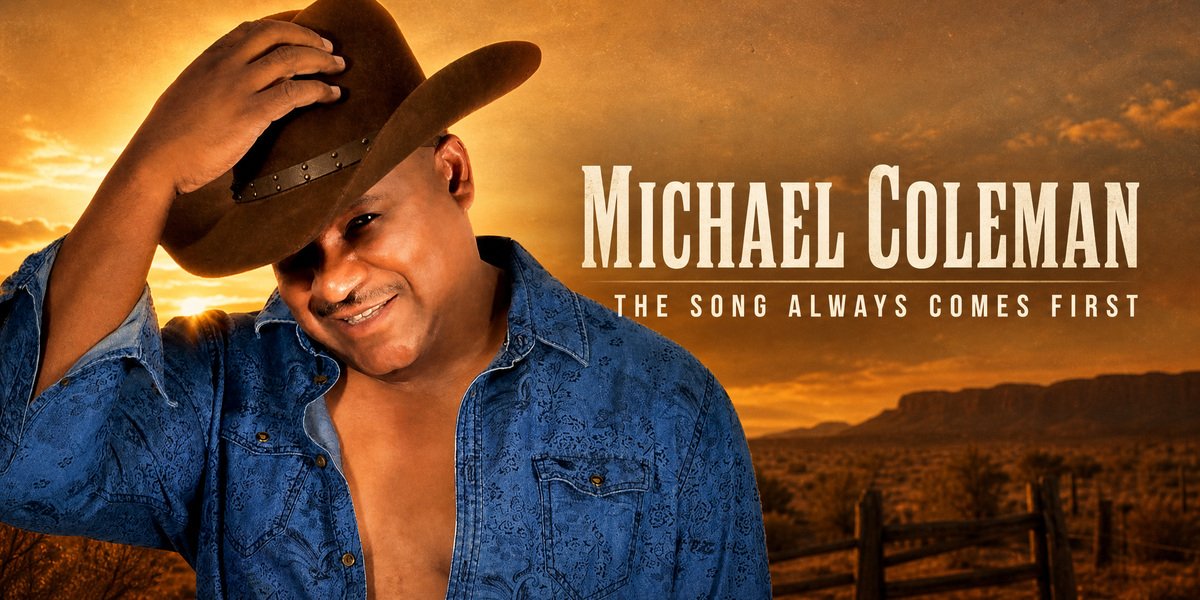
The Phoenix-based music creation entity, headed by songwriter, producer, and Artistic Director Michael Coleman, doesn’t belong to the Bakersfield Sound, Laurel Canyon country-rock, or today’s polished California country scene. Yet Coleman shares something important with all of them: a belief that the story matters more than the rulebook.
And “Another Saturday” has one hell of a story.
Coleman introduces us to a woman waking after another night spent trying to escape herself. She’s in a haze. A stranger is beside her. She doesn’t quite know how she got home.
Yet the cruelest detail is that even with someone lying beside her, she remains alone.
That’s where Coleman separates this song from the thousands of country records that have celebrated Saturday-night excess. He’s not interested in the party.
He’s interested in the bill that arrives afterward.
His protagonist sends the stranger away, thanking him for the good time while acknowledging that he isn’t what she needs. That distinction transforms what could have been another drinking-and-hookup song into something considerably more mature.
She’s searching for connection.
She’s finding company.
Those aren’t the same thing.
It’s easy to imagine this story relocated to California. Put her in a Los Angeles apartment as morning sunlight pushes through the blinds. Maybe she’s driving the 101 before traffic thickens, passing people headed toward lives that seem considerably more organized than hers. Or perhaps she’s farther north, where the landscape becomes quieter, and there’s nowhere for loneliness to hide.
The geography doesn’t matter much because Coleman has written the sort of character California has always attracted: someone trying to become somebody else.
The state has sold reinvention almost as aggressively as it has sold sunshine. Come west. Start over. Become the person you were supposed to be.
“Another Saturday” quietly asks what happens when reinvention doesn’t happen on schedule.
Coleman’s woman used to be someone’s wife. Now she’s nobody’s girl.
That simple contrast carries the emotional architecture of the song.
Divorce hasn’t merely removed another person from her life. It has erased a role she understood. She’s suddenly confronted with that terrifying adult question: Who am I now?
The song’s second verse is where Coleman’s storytelling becomes especially effective.
She gets out of the shower, looks in the mirror, and searches through the closet for something cute that still fits.
Nothing about that scene is traditionally dramatic.
That’s precisely why it works.
Great country songwriting has always understood that heartbreak usually reveals itself through ordinary objects. A photograph. An empty side of the bed. A wedding ring sitting in a drawer.
Here it’s clothing.
She’s searching for something that still fits, and the line inevitably raises the larger question of whether anything about her previous identity fits anymore.
There’s a distinctly singer-songwriter quality to that kind of observation, one that wouldn’t feel out of place in California’s long tradition of writers turning private uncertainty into something communal.
Coleman also makes the crucial decision not to judge her.
That’s important.
A lesser song could treat the protagonist’s behavior as either scandalous or triumphant. She could become the fallen woman or the newly liberated divorcée.
Coleman chooses neither.
She’s simply wounded.
And wounded people aren’t always heroic. Sometimes they make the same mistake repeatedly. Sometimes they know the stranger won’t fix anything and invite him home anyway.
Sometimes they start the cycle over next Saturday.
That’s where “Another Saturday” becomes darker than its relatively straightforward country framework initially suggests.
There is no Hollywood ending.
Nobody appears in the third act to rescue her. She doesn’t suddenly discover that everything happens for a reason. There isn’t even a promise that she’s learned something.
Coleman allows uncertainty to remain unresolved.
It’s an unusually confident songwriting choice because popular music loves closure almost as much as Hollywood does. We want transformation before the final chorus.
Life rarely cooperates.
See Your Shadow’s unusual structure helps explain why Coleman can make records like this. Rather than operating as a conventional band, he works through a “Network of Stars,” bringing musicians and vocalists together according to the demands of each composition.
The song is the permanent member.
That approach has helped See Your Shadow build an award-winning independent career and a remarkable string of chart successes, but “Another Saturday” suggests that the more interesting achievement is Coleman’s consistency as a storyteller.
He notices people.
More importantly, he seems interested in the people others might dismiss.
California country has historically thrived when artists stepped outside Nashville convention. From Bakersfield’s harder edges to Southern California’s genre-blurring country-rock, the West Coast repeatedly demonstrated that country music could change its clothes without abandoning its emotional core.
“Another Saturday” belongs to that tradition in spirit.
Not because it sounds like Buck Owens or Gram Parsons.
Because it values independence.
Coleman doesn’t tell his character what she’s supposed to become.
He simply gives her enough dignity to keep searching.
Maybe next Saturday will be different.
Maybe it won’t.
But somewhere between the desert and the California coast, that woman is still getting dressed, still stepping outside and still hoping there might be another version of her life waiting down the road.
And sometimes country music doesn’t need to provide the destination.
It just needs to understand why somebody keeps driving.