By: Seth Adams
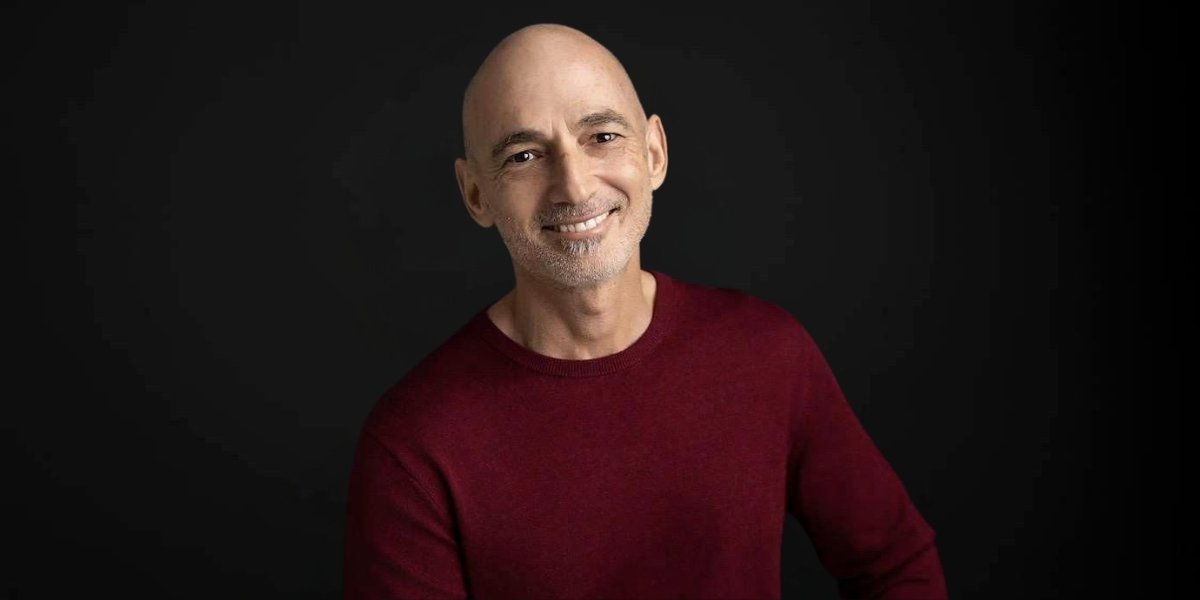
Although Nir Peled’sBeyond 100%: Rebuilding Life After It Breaks is anchored in stroke recovery, the book is not only for stroke survivors. It is for anyone who wakes up after a crisis and realizes the old map fails. Peled knows that territory intimately. He has survived a bombing in Sinai, anaphylaxis, the 2004 Indian Ocean tsunami, a violent kidnapping and robbery in the Amazon, cancer, a motorcycle accident, and a stroke at 49 that left him unable to speak or move.
Those events could have produced a traditional survival memoir. Instead, Peled wrote something more structured: a practical guide for rebuilding after life breaks. “The stroke is the anchor story, but the framework applies to any life-altering disruption,” he says. “Job loss, divorce, burnout, cancer, loss.” The intended reader is not someone looking for a slogan. It is someone standing in the wreckage of a life, role, body, relationship, or career that can no longer be recognized.
Peled describes his primary audience with striking precision. “My primary audience is people in their 30s to 60s who were the strong ones, the achievers, the people everyone else leaned on, who suddenly find themselves unable to recognize their own life,” he says. “They don’t want pity, and they don’t want vague inspiration. They want a plan.”
The plan is Beyond 100%, a framework built around Body, Mind, and Spirit; seven recovery rules; surrender; four stages of rebuilding; and a recovery blueprint for how capabilities return. Peled developed it not as a clinician observing adversity, but as a practitioner inside it. He had served as an officer in an elite IDF unit and worked as a Fortune 500 technology executive, but after the stroke, the challenge was internal. The system that failed was his own.
“I wrote the book later, because the guide I needed when I was in the middle of it, practical, structured, something you can actually use the morning after your world falls apart, didn’t exist,” he says.
For survivors, the framework offers language for the invisible parts of recovery. Peled’s journal began with videos of himself learning to speak again and later continued through the slow return of typing. But the book goes beyond visible milestones. It addresses identity, grief, purpose, exhaustion, fear, and the emotional whiplash of progress that appears, disappears, and returns differently.
For caregivers and family members, Beyond 100% offers another kind of map. It helps explain why recovery is not simply a matter of effort or attitude. The body may need practice, the mind may need structure, and the spirit may need meaning. A survivor may be progressing even on a day that looks quiet from the outside. “It can be anything, even rest, a good cry, one minute of breathing with your eyes closed, a laugh,” Peled says of the 1% Rule. “These are all examples of progress.”
For healthcare, wellness, and human-performance professionals, the book provides a first-person account of structured resilience from the inside. Peled is not dismissing medical care or therapy; his framework grew alongside rehabilitation. But he adds the lived dimension that patients often struggle to articulate: the need to rebuild not only function, but identity and meaning.
For leaders and organizations, the relevance is different but related. Peled sees recovery and leadership through the same systems lens. “In tech leadership, you are constantly dealing with systems that break and need to be rebuilt under pressure with incomplete information,” he says. “Recovery is the same environment. The difference is that in the corporate world the system that breaks is external. In recovery, it’s you.” Organizations facing disruption may recognize the same pattern: uncertainty, loss of control, the need for little measurable progress, and the danger of pretending that the old system can simply be restored.
The title Beyond 100% is not a claim that crisis is good. Peled is explicit about that. “I’ll never be the same Nir, the same ‘100%’ as I was, not physically or mentally,” he says. The promise is not a return to the old self. It is the possibility of building something stronger after the old self is gone.
“The person you build on the other side is not a restored version of who you were,” he says. “They are something stronger in its place.”
That message may be why the framework can travel across so many kinds of disruption. Whether the breaking point is illness, accident, burnout, divorce, grief, or professional collapse, the central question changes from How do I go back? to What can I build now?
Peled’s answer is intentionally small at first. “There is always a path forward. Not back. Forward. And it starts with one very small step tomorrow morning.” For survivors, caregivers, and leaders alike, that step begins rebuilding.
Beyond 100%: Rebuilding Life After It Breaks is now available on Amazon.