By Adrian Wells
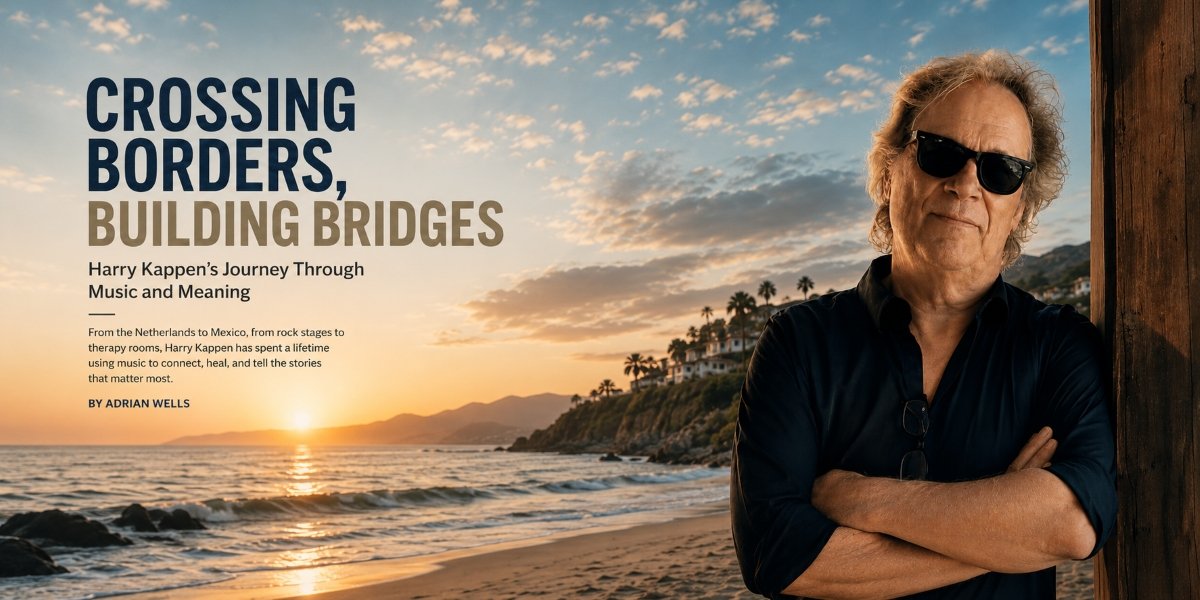
Some musicians spend their careers chasing the next hit. Others spend their lives chasing something far more elusive: understanding. Dutch-born singer-songwriter, producer, multi-instrumentalist, and music therapist Harry Kappen has built his career around the latter. Over decades of making music, working with young people through therapy, teaching future music therapists, and recently relocating halfway around the world, Kappen has remained remarkably consistent in one regard, his songs always seek the humanity behind the headlines.
That commitment reaches a new peak on After the Crossing, his fifth album since the Covid era and the first written and recorded following his move from the Netherlands to Mexico. The title itself serves as both geography and metaphor. While the crossing refers in part to Kappen’s own journey to a new country, it also reflects the emotional transitions that have defined much of his artistic life.
Born in Groningen in the northern Netherlands, Kappen developed his musical instincts in local rock bands, immersing himself in live performance while absorbing influences that ranged from David Bowie and The Beatles to Jeff Beck, Prince, Thom Yorke, and Louis Cole. His tastes were eclectic, but the common thread was clear: artists who refused to stand still creatively.
That curiosity became the hallmark of his own work.
Before fully establishing himself as a solo recording artist, Kappen also composed music for Dutch radio and television, gaining valuable experience in arrangement, production, and sonic storytelling. Rather than viewing music solely as entertainment, he increasingly came to understand it as communication, an idea that would shape the next phase of his life.
Studying music therapy opened another door entirely. For more than twenty years, Kappen worked in youth care, using music to connect with children, families, and individuals facing emotional and psychological challenges. He later became a lecturer in an international master’s program in music therapy, sharing not only technical knowledge but the deeper philosophy that music can create understanding where words sometimes fail.
Those experiences fundamentally changed his songwriting.
Unlike many contemporary artists who build songs around autobiography or spectacle, Kappen’s work consistently turns outward. His lyrics often inhabit the lives of others, exploring empathy instead of ego. Listening to his catalog, one hears an artist interested less in self-expression than in shared experience.
That quality has become especially pronounced over the past several years.
During a remarkably productive creative period, Kappen released Escape, Time Will Tell, Four, and now After the Crossing. Each album expands his musical vocabulary while remaining anchored by thoughtful songwriting and sophisticated production, all performed, arranged, and produced by Kappen himself.
Recognition has naturally followed. His work has earned an Elite Music Award for Songwriter of the Year, an Independent Music Network Award as Favorite Impact Artist, along with nominations from organizations including the ISSA Awards and the Josie Music Awards. Those honors acknowledge not only musical excellence but the emotional depth that has become synonymous with his work.
Yet perhaps the most transformative chapter of Kappen’s story began away from the studio.
Relocating from the Netherlands to Mexico represented more than a change of scenery. It was an opportunity to begin again in a different culture while continuing both his music and his therapeutic work on a smaller scale. The move offered fresh inspiration, but it also gave Kappen a profound appreciation for the difference between voluntary migration and forced displacement.
That realization became the foundation for After the Crossing‘s standout single, “Distant Shore.”
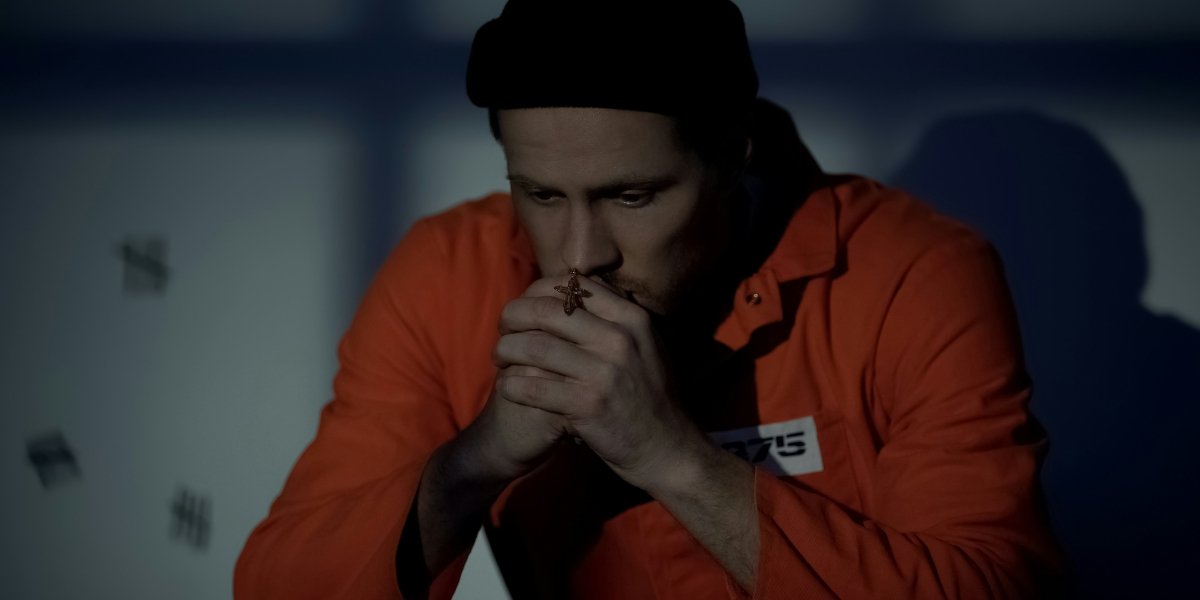
Inspired by the stories of refugees risking everything to escape war, poverty, and persecution, the song is one of Kappen’s most emotionally powerful compositions. Rather than offering political commentary, it focuses on individual humanity: a final glance at home, overcrowded trucks, violent seas, whispered prayers, and the fragile hope that somewhere beyond the horizon lies safety.
The song’s haunting mellotron textures pay subtle tribute to David Bowie’s “Space Oddity,” one of Kappen’s lifelong musical touchstones, while its restrained production allows the emotional weight of the lyrics to breathe naturally. It is both deeply personal and quietly universal, a reflection of Kappen’s ability to transform complex global issues into intimate human stories.
That balance defines his broader body of work.
Kappen has never been interested in following musical fashions. Instead, he has steadily built a catalog rooted in craftsmanship, emotional intelligence, and artistic independence. His songs embrace ambiguity rather than certainty, compassion rather than judgment. They ask questions instead of providing easy answers.
In today’s music industry, where success is often measured by clicks, streams, and viral moments, Harry Kappen offers a different model of artistic longevity. His career demonstrates that authenticity still resonates, that thoughtful songwriting still matters, and that music can remain both intellectually engaging and emotionally accessible.
Standing at the intersection of two continents and several careers, musician, producer, educator, therapist, and songwriter, Harry Kappen continues to evolve without abandoning the values that first inspired him to create. After the Crossing is more than an album title; it is an apt description of a life spent embracing change while remaining true to a singular artistic vision.
Some artists cross genres. Some cross generations.
Harry Kappen crossed an ocean, and found new stories waiting on the other side.