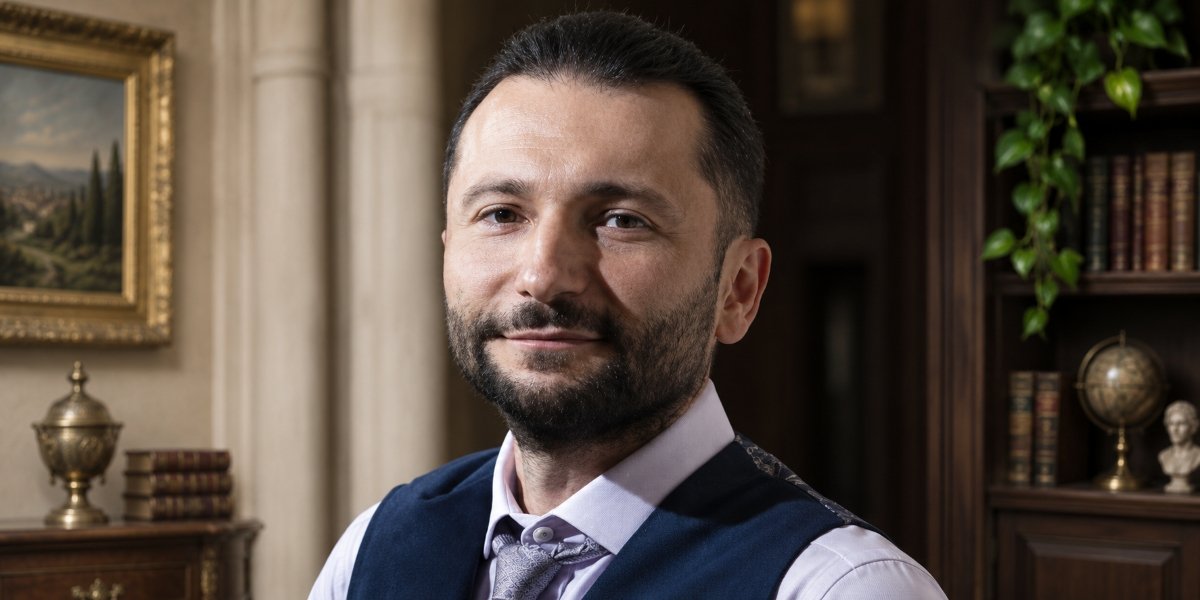
The educational journey of Dr. Tonse Narayana Krishna Raju spans countries, institutions, specialties, and decades of continuous learning and teaching. From his early schooling in Karnataka, India, to advanced training in pediatrics and neonatal-perinatal medicine and a long academic career in the United States, Dr. Raju’s path reflects a sustained commitment to medicine, research, and education.
Early Education in India
Dr. Raju spent his childhood and school years in Periyapatna, a town in Karnataka State, India. He attended District Board High School in Periyapatna before moving to Mysore, now known as Mysuru, for his pre-medical university education at Yuvaraja College.
His transition from a small-town education to university-level medical study marked the beginning of a career that would eventually encompass clinical medicine, academic teaching, neonatal research, and national-level work in the United States.
Dr. Raju pursued his Bachelor of Medicine, Bachelor of Surgery (MBBS) through the University of Mysore, completing the degree in 1968. He then continued his postgraduate education at the University of Bombay, where he earned a Diploma in Child Health (DCH) and a Doctor of Medicine in Pediatrics (MD-Pediatrics).
His principal fields of specialization became pediatrics and neonatal-perinatal medicine. Dr. Raju states that throughout his certification examinations, he consistently ranked within the top 10 percent of his graduating classes.
Residency and Advanced Medical Training
Dr. Raju’s postgraduate development involved medical training in both India and the United States.
He completed his initial residency in Mysore during 1967–1968 as part of the requirements for his MBBS degree. He subsequently undertook residency training in pediatrics in Mumbai from 1968 to 1972, leading to his MD in Pediatrics.
After moving to the United States, he repeated residency and completed fellowship training at the University of Illinois at Chicago in preparation for American pediatric board certification.
His subsequent professional credentials included becoming a Diplomate of the American Board of Pediatrics and a Fellow of the American Academy of Pediatrics, as well as completing subspecialty certification through the Neonatal-Perinatal Medicine Sub-board of the American Board of Pediatrics.
By the end of the 1970s, his educational foundation had developed from general medical training into specialized expertise in pediatrics, neonatology, and perinatal medicine.
Transition from Student to Academic Educator
Dr. Raju’s relationship with the University of Illinois at Chicago became a defining part of his academic career.
He served as an Instructor in Pediatrics at the Abraham Lincoln School of Medicine, University of Illinois at Chicago, from July 1974 to June 1976. He subsequently became Assistant Professor of Pediatrics, serving from 1976 to 1980.
His academic responsibilities expanded over the following years. He served as Acting In-Charge of the Division of Neonatology in 1982–1983, became Associate Professor of Pediatrics in 1982, and was appointed Professor of Pediatrics and Obstetrics & Gynecology in 1990.
These positions allowed him to combine clinical medicine with education and research, particularly in neonatal intensive care.
Teaching Generations of Medical Professionals
Education became an important part of Dr. Raju’s professional identity. During his academic career, he supervised medical students, pediatric residents, neonatology fellows, and visiting scientists.
He estimates that he mentored approximately 80 medical students, 120 pediatric residents, and 60 neonatology fellows.
A number of his former trainees went on to senior positions in academic medicine. Among those identified by Dr. Raju are Dr. Elie Saliba, who became Professor of Pediatrics at Tours, France; Dr. Lucky Jain, Professor of Pediatrics and former Chair of Pediatrics at Emory University; Dr. Sachin Amin, identified as Neonatology Chief at Loyola University Chicago; and Dr. Mark Anderson, Professor of Pediatrics at the University of Tennessee in Knoxville.
One example of Dr. Raju’s mentorship involved Dr. Elie Saliba, who worked at the University of Illinois at Chicago during the 1980s. According to Dr. Raju, Dr. Saliba’s work there contributed to his PhD at the University of Tours in France, and Dr. Raju was later invited to serve as one of the referees when Saliba defended his doctoral thesis.
A Philosophy Built Around Questions
Despite a long career in medicine, Dr. Raju describes his philosophy of teaching in remarkably concise terms: “Be honest.”
His approach to medical education has emphasized more than transferring established knowledge. He identifies one of his most important goals as an educator as encouraging students to think independently, ask meaningful questions, and challenge authority.
That philosophy reflects a broader view of medical education in which questioning existing assumptions is an essential component of scientific advancement.
Academic Leadership Beyond the Classroom
Dr. Raju’s educational activities were not confined to formal university teaching.
At the University of Illinois, he participated primarily in research and pharmacy committees and led numerous animal and clinical research activities. His academic appointments later extended beyond Illinois.
He served as an honorary adjunct professor of pediatrics at MedStar-Georgetown University from 2003 to 2018 and has also held an adjunct professorship at the Uniformed Services University of the Health Sciences in Bethesda.
His role as an educator extended internationally as well. Dr. Raju reports teaching scientists and medical professionals about neonatal care and resuscitation in Poland, Lithuania, Uzbekistan, and numerous institutions in India.
Sharing Medical Knowledge Through Lectures and Conferences
Throughout his career, Dr. Raju has been invited to speak at universities, hospitals, professional meetings, and medical conferences. His questionnaire notes more than 75 invited lectures.
His speaking engagements have included presentations and lectures associated with institutions and professional meetings in the United States as well as international appearances in locations including the United Kingdom, Egypt, Poland, and India.
Topics have ranged from neonatal medicine and late-preterm birth to umbilical cord clamping, neonatal devices, patient safety, prematurity, and the history of medicine.
His invitations have included grand rounds, keynote addresses, professional workshops, and scientific conferences. In 2010, for example, he delivered a medical college commencement address at Sri Devaraj Urs Academy of Higher Education and Research in Kolar, India. He also participated in an international conference at the University of Birmingham in 2013, where he spoke about cord clamping.
Education as a Lifelong Contribution
Dr. Raju’s educational story ultimately extends well beyond the degrees and certifications he earned.
His journey began in Periyapatna and Mysore, continued through pediatric specialization in Mumbai, and developed further through residency and fellowship training in Chicago. He subsequently moved from trainee to professor, clinical leader, researcher, mentor, lecturer, and educator.
Through decades of teaching medical students, pediatric residents, neonatology fellows, researchers, and practicing professionals, Dr. Raju has approached education as an opportunity to cultivate curiosity rather than simply deliver information.
When asked how he would like his professional legacy to be described, his answer was characteristically simple: as “a good teacher, and a good doctor.”
That statement connects the beginning and the later stages of his career. His formal education gave him the foundation to practice medicine; his academic career gave him the opportunity to pass that knowledge—and the habit of questioning it—to generations that followed.