
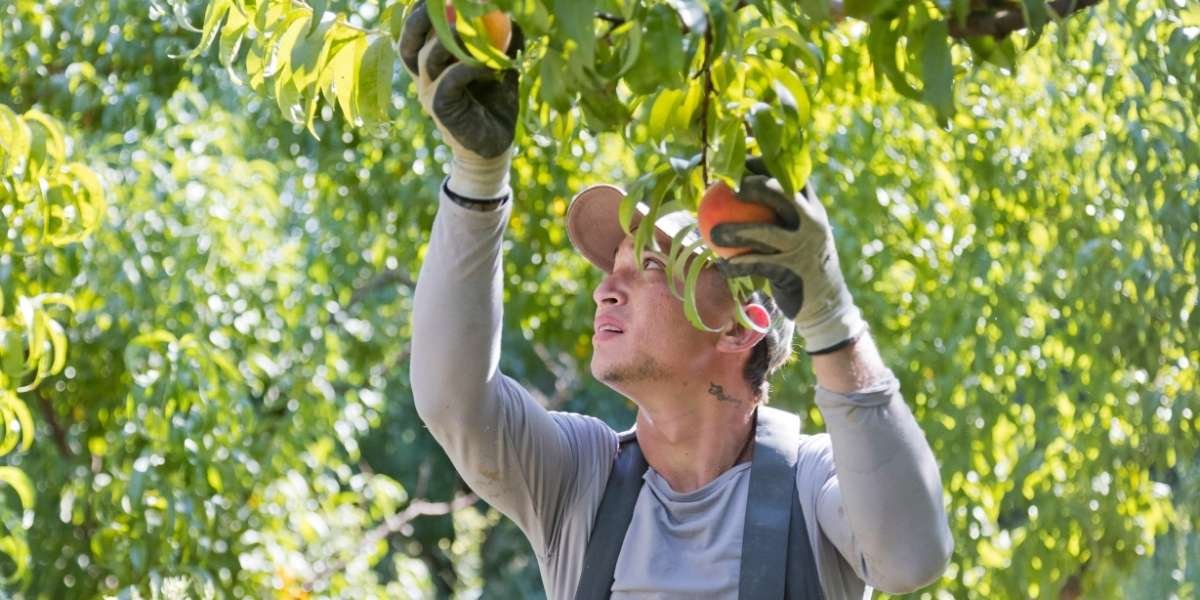
California peach farmers are bracing for a major loss as 420,000 clingstone peach trees are set to be removed from around 3,000 acres of orchard land following the closure of key processing facilities tied to Del Monte Foods. The closures, which came after the company’s bankruptcy proceedings and the shutdown of its canning plants, leave growers with little option but to clear their orchards ahead of the summer harvest.
The closures of the Del Monte Foods canneries in Modesto and Hughson have caused major disruptions in the state’s peach industry. The plants were responsible for processing a large portion of peaches grown in California’s Central Valley, where much of the state’s peach production is concentrated.
Del Monte Foods Shuts Down Canning Operations
For years, California growers have relied on contracts with processing plants like Del Monte Foods’ canneries to handle their crops of clingstone peaches. Unlike fresh peaches, which are sold in grocery stores, clingstone peaches are specifically cultivated for canning and preserving. Without these processing plants to handle their harvest, farmers have found themselves with a crop they can no longer sell.
In spring 2026, Del Monte Foods made the decision to close its Modesto and Hughson canneries, effectively halting peach processing. The move, following Del Monte’s bankruptcy filing, left farmers across the region struggling to find buyers for their crops. The closures have left many growers with peaches they can no longer process or sell, forcing them to turn to removal as a last resort.
Industry reports show that over 3,000 acres of orchard land in the Central Valley will be impacted, with 420,000 peach trees set to be uprooted. These closures and the resulting tree removal mark a significant loss for the state’s peach industry, which has historically been a staple of California agriculture.
Federal Funding Approved to Assist with Tree Removal
In light of the crisis facing California peach growers, the U.S. Department of Agriculture (USDA) has approved $9 million in federal assistance to help cover the costs of removing the trees. The funding will help growers clear their land and prepare it for alternative uses. For many of the affected farmers, the assistance comes as a welcome relief, providing some financial support during a difficult transition.
The tree removal process is not quick or inexpensive. Growers must use specialized equipment to dig up the trees and prepare the soil for future use. This process requires significant labor and resources. However, it is considered essential for maintaining the viability of the land and keeping it productive in the long term. For many farmers, these funds offer a vital lifeline to move forward after the closure of Del Monte Foods’ canneries.
Transitioning Orchard Land
Once the trees are removed, California peach growers will have to decide what to do with the land. The removal of the 420,000 peach trees is just one step in a larger process of adapting to new market realities. Because clingstone peaches are quite different from fresh peaches, growers cannot simply replace them with other varieties. Fresh peaches, while grown in California, are typically handled by different processors with distinct supply chains. This means that many orchards will need to explore other crop options to remain viable.
Some growers are looking into converting their land to other fruit crops, such as freestone peaches, plums, or even vineyards. However, these transitions are not without challenges. Crops like freestone peaches, which are typically sold fresh, have different growing requirements and timelines, meaning farmers will need to invest time and money to replant and adapt their farming methods.
Other growers are considering converting the land to nut orchards or other perennial crops, which would allow them to continue farming on the same land without the need for annual replanting. However, these decisions will take time and effort to implement, and many farmers are unsure whether these alternatives will be enough to replace the income lost from the peach processing shutdown.
Impact on Local Communities and Agricultural Workforce
The closure of the Del Monte Foods canneries not only affects the farmers but also the local workforce that depended on the seasonal work provided by these plants. In communities around Modesto and Hughson, many individuals and families rely on processing plants for seasonal employment during peach harvests. The loss of these jobs is felt across entire regions that have long been tied to California’s agricultural industry.
With the plants closed, the immediate loss of employment has been significant. Processing work at the canneries was often among the most stable forms of work available in these rural communities. As a result, many local families are now facing economic uncertainty, with few immediate prospects for new job opportunities in the area.
The broader economic ripple effect of the plant closures also extends to local businesses and service providers who depend on the spending power of agricultural workers. Everything from restaurants and retail shops to equipment suppliers and logistics companies is impacted by the downturn in the local economy caused by the closure of Del Monte Foods’ processing operations.