By Lisa Halligan
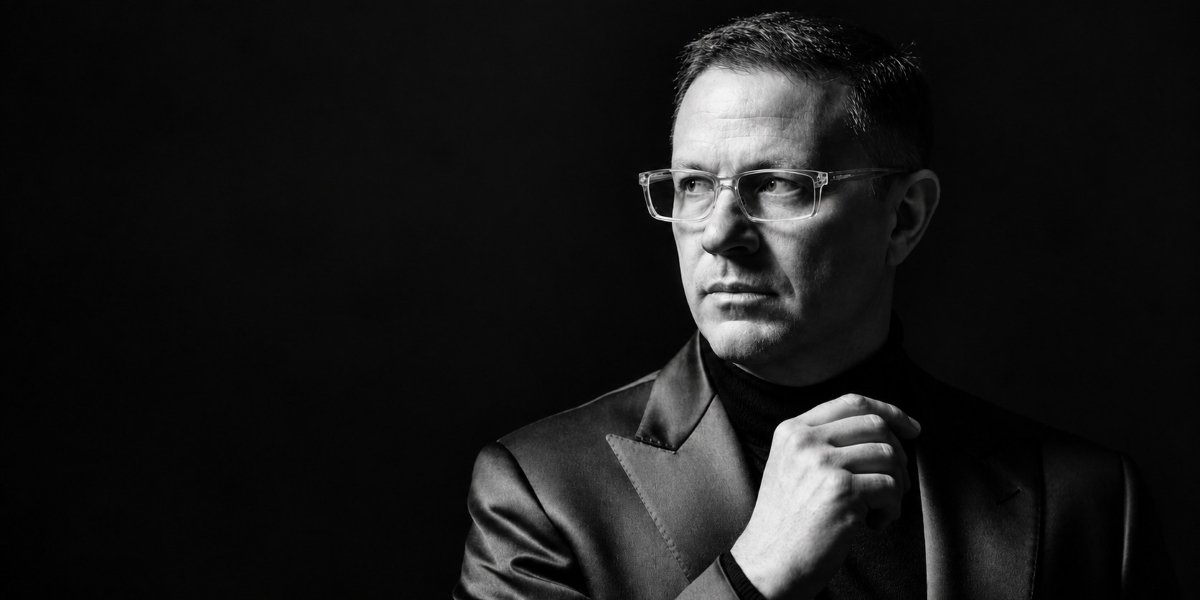
The Across Latitudes trilogy may be built around intelligence operations, modern conflict, and international suspense, but author Brett Andrew Strange places the series within a literary tradition that reaches well beyond contemporary thrillers.
Strange, a former U.S. intelligence officer, is the author of Against the Dusk, Beneath the Purple Dawn, and Eastern Light, the three novels that form Across Latitudes. He also wrote Encounters: Six Short Stories. His research has included travel to more than two dozen countries, and he has lived and worked in Europe, the Middle East, and Asia. He now lives in San Francisco.
Across Latitudes tells one continuous story set between 2017 and 2024. It follows Paul Drake, an Iraq-war veteran, and Katerina Volkova, a Russian-born art curator, through a network of shadow warfare that stretches from New York and Istanbul to Paris, Malta, Sicily, and Ukraine.
For all of its modern settings, Strange says the books were deliberately shaped by older literary influences.
“Very deliberately, yes,” he said when asked whether he wanted to place the work within a longer tradition of espionage and war novels. “Hemingway is a foundational influence – his command of psychological depth without the need for too much explicit detail was a key influence.”
That influence is visible in Strange’s preference for emotional pressure that is not always explained at length. Characters carry private motives, failures, family problems, and competing loyalties while moving through a fast-paced plot. The author describes Across Latitudes as a revenge tale and a love story as well as an espionage trilogy.
Strange also looks toward Russian literature, particularly writers whose work examines power, freedom, moral choice, and the individual inside vast historical forces.
“And there’s a direct line back to the Russian literary tradition – Tolstoy is a big one because he carefully crafted his fictional worlds, and Mikhail Bulgakov, who was born in Kyiv and wrote about the nature of freedom in a repressed society during the 1920s,” Strange said.
Those influences fit naturally with a trilogy that eventually reaches the Russian invasion of Ukraine. But Strange’s interest is not limited to political parallels. He is also interested in the endurance of art and ideas when political systems and human lives are fragile.
“The trilogy closes on Bulgakov’s line from The Master and Margarita, that ‘manuscripts don’t burn,'” he said. “That endurance – vita brevis, ars longa, life is short, art is long – is a perspective that is carried as an explicit theme.”
Art is also built into the trilogy through Katerina Volkova. As a Russian-born curator, she provides a different entry point into geopolitical conflict than a soldier or intelligence operative. Strange has pointed to her relationship with art as one way the series examines truth.
His literary preferences also help explain why the trilogy is designed to reach beyond a traditional thriller audience.
“I wanted to have the momentum of a thriller, combined with a sweeping love story, and a family drama,” Strange said. “None of the characters are invincible action heroes. They’re navigating imperfect choices and ordinary self-interest, which is a far more universal story than espionage alone.”
The series’ close third-person narration supports that aim by moving among protagonists, antagonists, and children affected by conflict. Strange says readers have responded to the ability to understand events from multiple perspectives while the plot continues at thriller speed.
His favorite authors reflect the same combination of concision, scale, and moral seriousness.
“Hemingway for his unadorned realism,” Strange said. “And there’s a strong pull toward the Russian tradition – Tolstoy for scale and moral seriousness, and Bulgakov because he lived and wrote about this part of the world.”
Strange’s interests continue beyond the trilogy. He says he is working on another collection of short stories set overseas and rooted in contemporary themes. “I’m still circling a lot of the same questions about human resolve and authentic freedom, but will do this outside the framework of Across Latitudes for the next book,” he said. That suggests the literary concerns behind the trilogy will continue even as the narrative form changes.
In that sense, the trilogy’s literary references are not decorative. They help Strange connect the immediate suspense of espionage with older questions about conscience, history, artistic endurance, and personal freedom.
Across Latitudes uses those influences without abandoning the demands of espionage fiction. Its covert operations, international settings, and contemporary conflicts provide suspense, while its literary ambitions focus attention on memory, freedom, love, and what survives after violence. Strange’s trilogy is therefore positioned as both a modern geopolitical thriller and a story in conversation with writers who examined how individuals endure history.
Across Latitudes is available on Amazon.