By Daniel Westbrook
California has always had a complicated but deeply affectionate relationship with country music. From the Bakersfield Sound of Buck Owens and Merle Haggard to the country-rock revolution that emerged from Los Angeles, the Golden State helped shape some of the genre’s most enduring traditions. And while Nashville may dominate the modern conversation, California’s contributions remind us that great country music has never belonged to just one region.
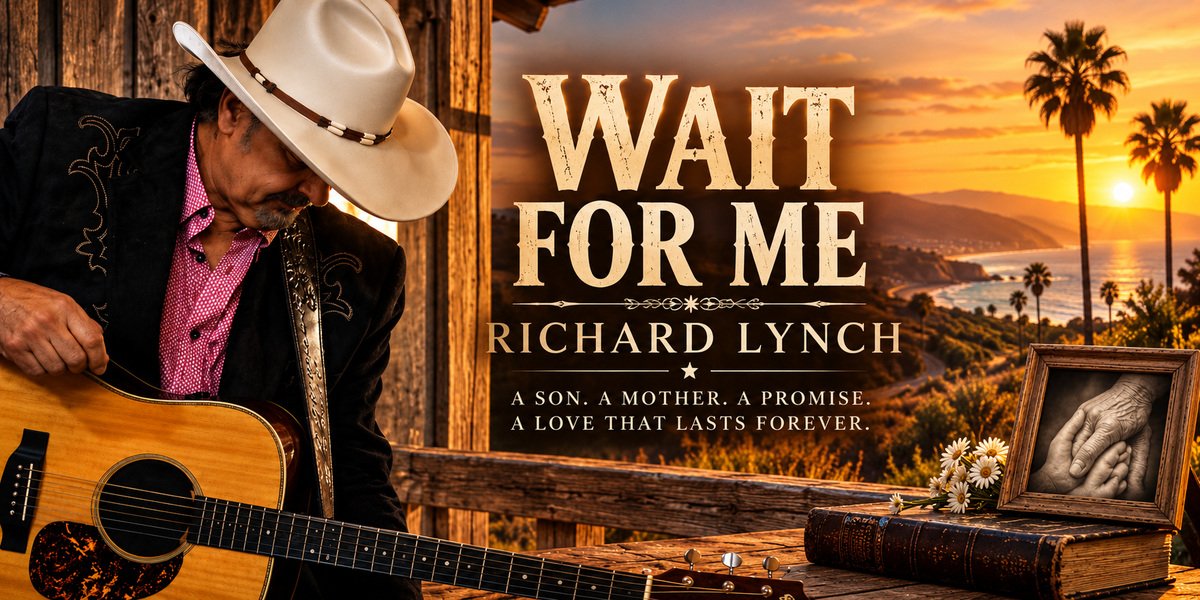
That history provides an interesting backdrop for Richard Lynch’s “Wait For Me,” a profoundly moving traditional country ballad that feels connected to the genre’s most honest storytelling traditions.
The Ohio-based singer-songwriter isn’t chasing the California country-rock sound or attempting to reinvent the wheel. Instead, Lynch delivers something that would have resonated just as strongly in a Bakersfield honky-tonk decades ago as it does with contemporary listeners: a heartfelt story about family, faith, mortality, and the words we desperately hope to say before time runs out.
Co-written with John Lee, “Wait For Me” centers on a son making his way to his dying mother’s bedside. She has made peace with God and is preparing to leave this world, but her son has one final request.
“Momma, I’m on my way.”
Then comes the heartbreaking plea: “Hold on, wait for me.”
It’s the kind of simple, devastating chorus that traditional country music has always understood how to deliver.
Lynch doesn’t surround the sentiment with elaborate metaphors or unnecessary dramatic flourishes. He trusts the emotional weight of the situation, allowing the listener to recognize the fear, urgency, and love contained in those few words.
The song begins with an intimate recollection. Lynch visits his mother and finds her sleeping. He stays beside her, holds her hands, and begins to cry. But he quickly clarifies that his tears aren’t simply expressions of grief. They are also tears of gratitude.
Those hands, he remembers, once comforted him as a child.
They wiped away tears, soothed pain, stitched clothes, and performed countless acts of sacrifice that seemed ordinary at the time.
Lynch sings that they “moved mountains.”
It’s a familiar expression, but within the context of the song, it takes on genuine emotional significance. Anyone who has watched a parent grow older understands how the smallest physical details can suddenly carry enormous meaning.
A hand that once seemed impossibly strong becomes fragile. The person who provided comfort throughout childhood eventually becomes the one who needs comforting.
That reversal forms the emotional backbone of “Wait For Me.”
There’s a particular kind of storytelling tradition in California country music that makes Lynch’s approach especially compelling. Buck Owens understood the value of directness. Merle Haggard could communicate an entire working-class life through a few carefully chosen images. Their best songs rarely needed complicated language because the experiences themselves were already powerful.
Lynch operates with a similar philosophy.
His seasoned country baritone carries the authority of lived experience, and his delivery favors sincerity over vocal theatrics. He sounds like someone who understands that the most important thing a singer can do is make listeners believe the story.
The traditional country setting complements that approach, keeping the focus firmly on the lyric and its emotional progression.
In an era when commercial country frequently borrows from pop, rock, and hip-hop, Lynch’s commitment to the genre’s foundational storytelling remains refreshing.
California’s own musical history offers a useful reminder that country music has always evolved through different regional identities. The Bakersfield musicians pushed against Nashville’s polished conventions, while Los Angeles artists helped bring country influences into rock music.
Yet beneath those stylistic differences, the best songs shared a commitment to recognizable human experiences.
“Wait For Me” belongs to that tradition.
The song’s third verse is particularly affecting. Lynch wonders whether his mother’s hands are tired now, whether they ache from everything they have done for others.
Then he expresses the hope that, during their final moments together, he might have returned some small measure of the comfort she provided throughout his life.
“Maybe I gave you a little comfort back, in some small way.”
That line may be the song’s emotional centerpiece.
It recognizes an uncomfortable truth about parenthood: children spend much of their lives receiving love without fully comprehending the sacrifices behind it. Only later do they begin to understand what was given.
And sometimes that understanding arrives when there is precious little time left.
Faith plays an equally important role in Lynch’s narrative. His mother has made peace with leaving this world because she believes in God, but her son’s belief doesn’t eliminate the sadness of saying goodbye.
Instead, faith provides a framework through which grief and gratitude can coexist.
The final lines deliver the resolution that listeners have been waiting for.
His mother’s pain is gone. She can finally rest.
Most importantly, her son made it in time.
“You held on / You waited for me.”
With those words, the song’s title transforms from a desperate request into an expression of profound thankfulness.
It’s an ending that avoids unnecessary melodrama because the emotional stakes have already been established so effectively.
For California listeners, whether they’re driving through the Central Valley, watching the Pacific sunset along the coast, or navigating the endless motion of Los Angeles, the message remains universal.
Time moves quickly.
Parents grow older.
And the opportunities we assume will always exist eventually disappear.
Richard Lynch’s “Wait For Me” reminds us that the most meaningful moments in life rarely involve fame, fortune, or recognition. More often, they’re found in quiet rooms, familiar voices, and the chance to hold someone’s hand one last time.
The song isn’t revolutionary, nor does it pretend to be.
Its strength lies in understanding that traditional country music doesn’t need reinvention to remain relevant. It simply needs artists willing to tell the truth.
From the honky-tonks of Bakersfield to the heartland roads of Ohio, that truth has always been country music’s greatest asset.
And with “Wait For Me,” Richard Lynch proves that sometimes the most powerful song is the one that reminds us to say “I love you” while there’s still time.