
By Alex Diaz
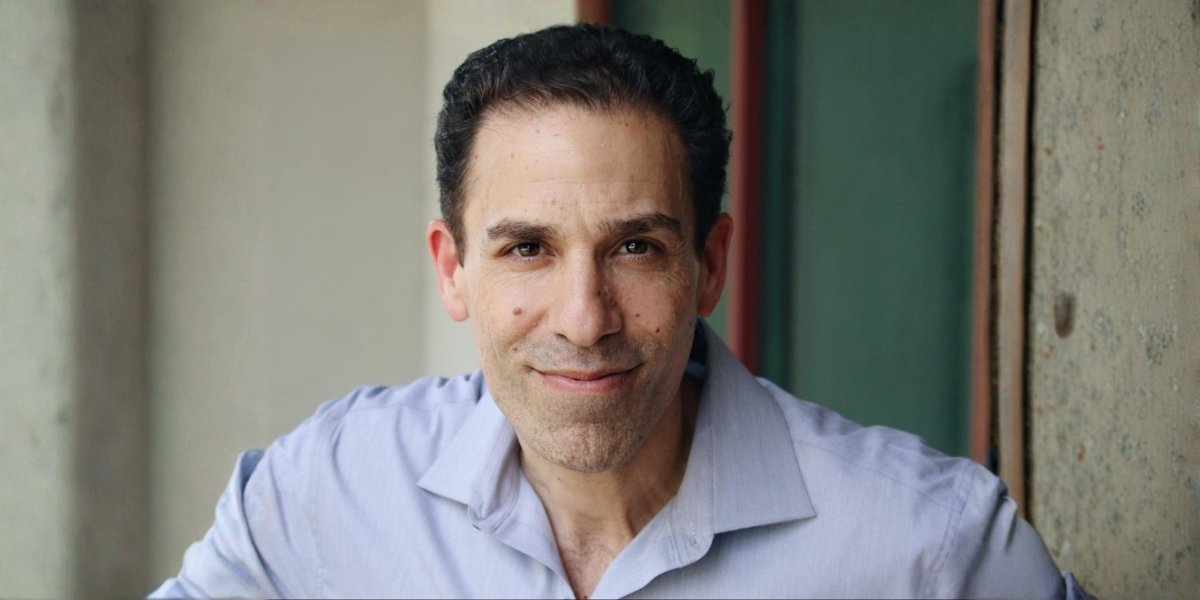
For most of his professional life, Seth Panitch has been a man of the stage. After earning his MFA from the University of Washington’s Professional Actors Training Program, he built a dynamic career as an actor and director at Shakespeare festivals across the country, including Colorado, Utah, Texas, Seattle, and Pasadena. In 2005, he joined the University of Alabama as a professor of theatre and head of the MFA Acting Program. In 2008, he became the first U.S. director to work in partnership with the Cuban National Office of Scenic Arts when he directed The Merchant of Venice in Havana. He also wrote, directed, and starred in two feature films, Service to Man and The Coming, and his plays have seen successful Off Broadway productions.
So why, after decades of achievement in theatre and film, did Panitch decide to write a novel?
In some ways, he says, it was less a shift than a return. “Actually, this is a switch BACK,” Panitch explains. “In High School, my great dream was to one day be a novelist, so in college, one of the reasons I tiptoed into Acting was that I hoped it would help my writing.”
That early ambition was eventually overtaken by opportunities in performance, directing, and academia. Doors kept opening, and he walked through them. “Grad school in classical acting, Shakespeare festivals, plays produced in NY and LA, the offer to head an MFA Acting Program at a major university, films, directing opportunities in Havana, Cuba, multiple works Off Broadway… All these were incredibly thrilling to me, and nourished me for decades,” he says.
But when the COVID-19 pandemic disrupted routines and created a rare moment of reflection, Panitch found himself revisiting the one path he had never fully explored. “When Covid hit, I had the opportunity to look back as well as forward and remembered that ONE DOOR I had never opened, the one I had always wished to try. So, here I am, right back where I started, it just took me thirty-five years to figure it out!”
That long journey to fiction became Antique, a novel about Grace Schaffer, a former star appraiser from an Antiques Roadshow-like series who is forced to rebuild her life after losing her marriage, her status, and her sense of self. When a mysterious necklace gives her the uncanny ability to predict the exact auction price of objects according to their emotional value, Grace is drawn back into the art world and into a deeper search for meaning.
For Panitch, writing a novel demanded a very different kind of creative stamina. In theatre and screenwriting, collaboration is central from the beginning. A playwright is always in conversation with actors, directors, designers, and producers. A screenwriter is similarly aware of the many hands that will shape a story into its final form. Fiction, at least in the first-draft stage, can feel much lonelier.
“At first, I was terrified,” Panitch says. “As a playwright and screenwriter, you are a constant collaborator, always trying to ensure all departments feel their voices are heard. But when I sat down to write the first draft, good lord, there was no one to collaborate with!”
That silence, though initially intimidating, eventually became liberating. Panitch discovered that the tools he had developed over a lifetime in the performing arts were not lost in fiction. They simply showed up in new ways. “At some point, though, I began collaborating with different parts of myself, allowing a different sort of give and take, and then things took off,” he says. “To be frank, it was the most fulfilling creative experience of my life to date.”
What surprised him most was how naturally his past training fed the work. “I was shocked to find that all my training as an actor, a director, a playwright, had all prepared me for the venture, I act when I write dialogue, I direct the action in the scene, and as a playwright, I use that dramatic structure to reveal character and therefore story.”
That synthesis helps explain why Antique feels so theatrical in the best sense: vivid, character-driven, emotionally immediate. Panitch understands how people speak when they are protecting themselves, aching, reaching, or trying to reinvent who they are. He knows how to pace revelation. He knows when to let silence do the work. And he understands that drama is not just about plot twists, but about identity.
His writing process reflects that structural discipline. “It always begins with an idea, a question,” he says. For Antique, that question was: “What would you do if you found an object that allowed you to set the price of things, not based on the market, but based on your emotional attachment to it?” From there, he researches the world of the novel, builds character outlines, pours out possible scenes and ideas, and eventually constructs an outline that can run as long as 50 pages.
Only then does the draft begin. “The first draft awaits, which for me is always looooooooong,” he says. “The second draft is the chiseling down of that huge mess, and in the process, the story truly emerges, draft by draft.”
If Antique marks a new chapter in Panitch’s career, it is also proof that artistic reinvention does not require abandoning the past. Instead, it can mean carrying every earlier experience into a new form. Panitch’s theatre work, film work, teaching, and years of storytelling all live inside the novel.
And perhaps that is one of the most encouraging parts of his journey. He offers simple but powerful advice to emerging writers: “IT IS NEVER TOO LATE TO START!”
For Panitch, the novel was not a detour from his life’s work. It was another expression of it, one that had been waiting, patiently, for decades.
Antique is available through Amazon and major booksellers.