
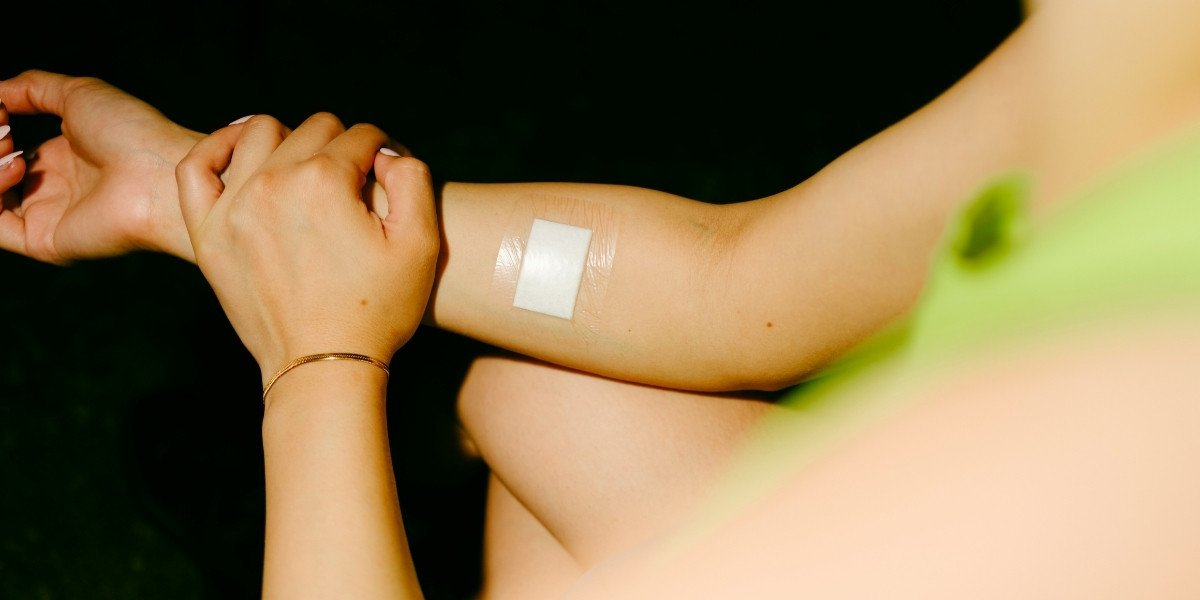
A Caltech wearable sensor tested in a 24-person preclinical study is designed to track cholesterol and triglyceride signals through sweat, then use machine learning to estimate corresponding blood lipid levels. The research shows how the patch works, why lipid sensing is technically difficult, and what remains unresolved before the system could move beyond an experimental setting.
Key Takeaways
- The preclinical study involved 24 participants and paired sweat measurements with blood analyses.
- The patch measures cholesterol and triglycerides in sweat, while machine learning accounts for factors including body mass index, sex and sweat rate.
- Caltech reported that an ATP-releasing polymer supported the process needed for triglyceride sensing for more than 20 hours.
- The system remains experimental and is not a replacement for a standard clinical lipid panel.
Caltech researchers have tested a stick-on sweat sensor aimed at something conventional cholesterol testing does not provide: continuous lipid measurements over time.
The device, developed by a team led by Wei Gao in Caltech’s Andrew and Peggy Cherng Department of Medical Engineering, measures cholesterol and triglycerides in sweat. Researchers combine those readings with a causal machine-learning model to estimate lipid levels in blood.
The work was published July 29, 2026, in Nature Sensors. Caltech highlighted the findings on August 12.
The distinction between sweat and blood measurements is important. Caltech says the relationship between lipid levels in the two fluids is not linear, so the model accounts for physiological factors that may influence sweat readings.
“Together, the sweat measurement and the causal machine learning model can predict the blood level with high accuracy,” Gao said in Caltech’s announcement. The statement reflects the team’s preclinical findings and does not establish the device as a clinically validated diagnostic test.
Caltech Wearable Sensor Links Sweat Data With Blood Lipids
The Caltech wearable sensor uses skin-based measurements to follow cholesterol and triglyceride signals without repeated blood collection during the monitoring period. Researchers paired sweat readings with blood analyses to examine how the measurements related.
The machine-learning model incorporated body mass index, sex and sweat rate. According to Caltech, those factors can affect the relationship between what appears in sweat and what is measured in blood.
That approach places the project among California research institutions applying machine learning across scientific and healthcare-related work. In this case, the algorithm is being used to interpret a biological signal rather than make a diagnosis.
The Nature Sensors paper also describes real-time lipid tracking during dietary challenges and routine activities. Researchers reported capturing different post-meal lipid responses associated with different macronutrient compositions.
Those time-series measurements are central to the project. Rather than relying on one reading, the wearable is designed to observe how lipid-related signals shift over time.
The Patch Addresses Two Difficult Lipid-Sensing Problems
Continuous lipid sensing presented technical challenges that required the researchers to modify how the patch detects specific molecules.
Caltech says much of the cholesterol in sweat is present as esterified cholesterol, which the sensor cannot detect directly. The researchers addressed that limitation through a two-step enzymatic process.
First, esterified cholesterol is converted into free cholesterol. The free cholesterol is then oxidized, generating hydrogen peroxide that the sensor can detect electrochemically.
Triglyceride sensing presented another problem. The reaction depends on adenosine triphosphate, or ATP, which is consumed during the sensing process. A system intended to operate continuously therefore needs a way to replenish that cofactor.
The team incorporated ATP into a polymer-based module designed to release it when exposed to sweat. Caltech reported that the design sustained the ATP supply needed for triglyceride sensing for more than 20 hours.
The approach explains the “cofactor-refreshing” language in the study’s title. Rather than analyzing only a short-lived sample, the researchers designed the patch to keep the multi-step sensing reaction functioning over a longer monitoring period.
The 24-Person Study Keeps the Findings Experimental
A conventional lipid panel remains a blood test. The National Heart, Lung, and Blood Institute says a standard panel provides measurements including total cholesterol, LDL cholesterol, HDL cholesterol and triglycerides.
The Caltech system measures cholesterol and triglycerides in sweat and applies modeling to estimate corresponding blood lipid levels. It should therefore not be described as reproducing every component of a standard clinical lipid panel.
Its research value lies partly in the timing of the data. A laboratory test captures lipid levels from a blood sample taken at a particular point, while the experimental wearable is designed to generate repeated readings that can show changes during activities or after meals.
The project also sits within broader NIH-backed biomedical research underway at California universities, where researchers are using new tools to examine biological processes in greater detail.
The size of the Caltech study remains an important limitation. Preclinical testing involved 24 participants, making the findings an early evaluation of the sensing system rather than broad clinical validation.
The study does not establish the sensor as a substitute for routine laboratory testing or show that it independently provides the full range of measurements included in a conventional lipid panel. It also does not establish that continuous sweat data should be used alone for screening, diagnosis or treatment decisions.
Researchers demonstrated that the patch could measure sweat lipids, sustain the reaction required for triglyceride sensing and combine sweat data with physiological variables through machine learning. The Nature Sensors paper describes individualized mappings between sweat and blood lipids as part of the research approach.
The Caltech wearable sensor is therefore best understood as an experimental method for studying lipid patterns over time. Larger and more varied studies would be needed to determine whether the approach can provide consistent performance across broader populations and everyday conditions.
Frequently Asked Questions
What Does the Caltech Wearable Sensor Measure?
The Caltech wearable sensor measures cholesterol and triglycerides in sweat. Researchers combine those readings with a machine-learning model designed to estimate corresponding lipid levels in blood.
How Does the Sensor Track Cholesterol Through Sweat?
The patch uses a two-step enzymatic process that converts esterified cholesterol into free cholesterol before producing a signal that can be detected electrochemically. The method addresses the difficulty of directly measuring esterified cholesterol in sweat.
Why Does the Device Use Machine Learning?
Caltech says the relationship between sweat lipids and blood lipids is not linear. The model accounts for factors including body mass index, sex and sweat rate when interpreting the measurements.
Has the Sensor Replaced Standard Cholesterol Blood Tests?
No. The device was tested in a 24-person preclinical study and remains experimental. Standard lipid panels use blood samples and provide measurements including total cholesterol, LDL cholesterol, HDL cholesterol and triglycerides.
How Long Can the Patch Support Triglyceride Sensing?
Caltech reported that the ATP-releasing polymer system sustained the ATP supply required for triglyceride sensing for more than 20 hours. That result concerns the experimental sensing mechanism and does not by itself establish clinical performance.