By: BNDS Media
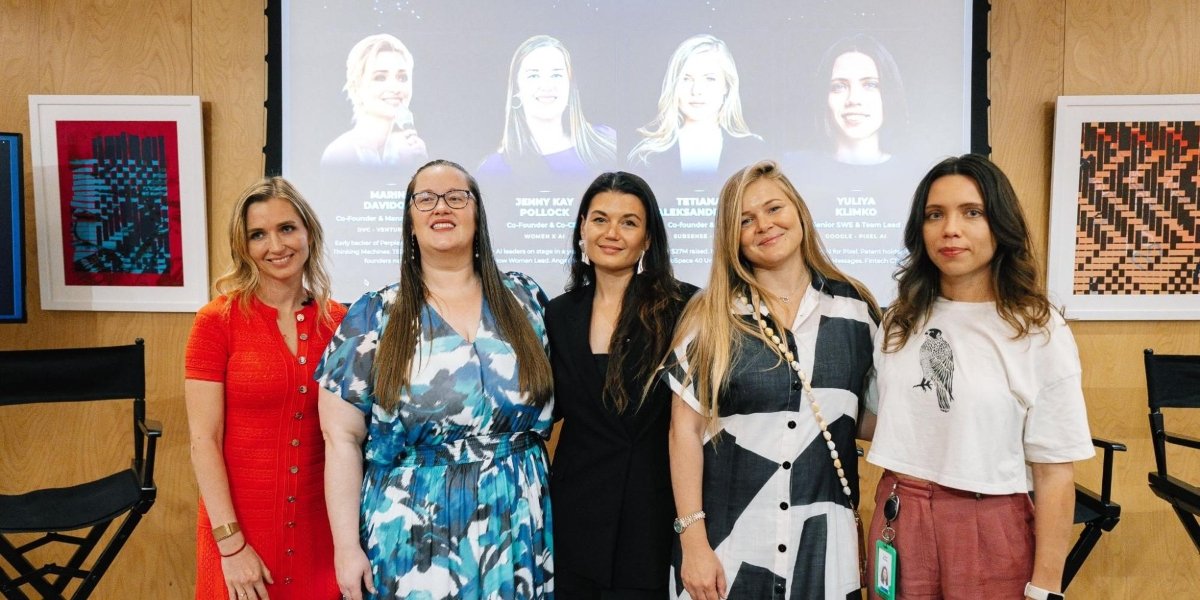
On July 24, 2026, in Huddle, Googleplex, Silicon Valley, four women took a stage in front of a room of eighty and were asked to do the one thing the industry avoids in public: disagree with each other.
The invitation had said it plainly. One stage, one conversation, real disagreement welcome.
Most AI programming in the Bay Area is not built that way. It is built around a founder explaining to a friendly audience why a product works. What almost never happens is a genuine argument between people who see the technology differently and who each have something at stake in being right.
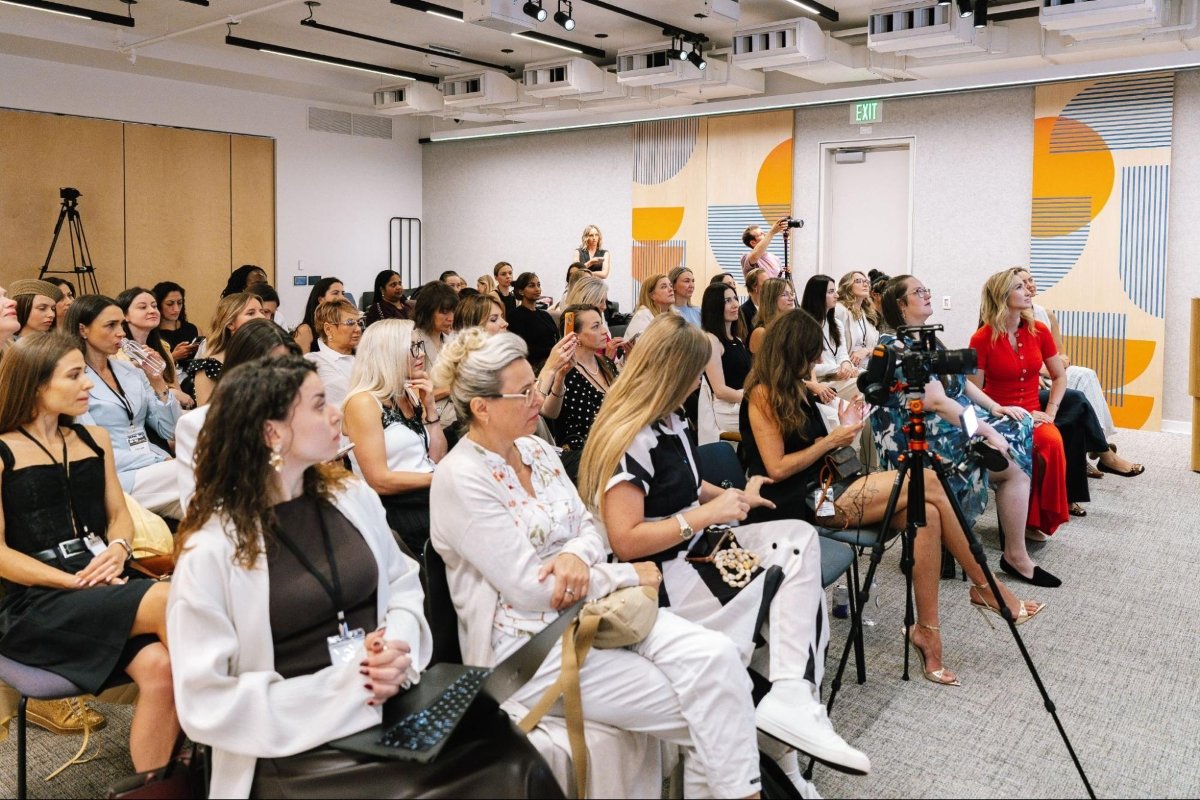
ISOUL, the global women’s association behind Women in AI: The Debate, built the evening around that absence. There were no keynotes and no product demos. Four panelists, one moderator, and eighty women in the room, each admitted by approval rather than open registration. Not everyone found a seat. People stood along the edges for stretches of it, phones up, filming.
Four Seats, Four Different Arguments
The panel had been composed so that no two people were likely to agree.
Marina Davidova, Co-Founder and Managing Partner at DVC, spoke from the capital side. Her fund backed Perplexity, Higgsfield and Thinking Machines early, and she has spoken at TEDx. Investors in her position decide which AI companies get to exist and which quietly do not.
Jenny Kay Pollock, Co-Founder and Co-CEO of Women x AI, argued from the community and platform side. She has put more than 130 AI leaders on stage in a single year and invests as an angel. Her concern was a scarcity not measured in dollars: who gets a microphone, and how early.
Tetiana Aleksandrova, Co-founder and CEO of Subsense, brought the hardest questions in the room. Subsense is building non-surgical brain-computer interfaces and has raised $27 million. Aleksandrova was named to the BioSpace 40 Under 40. As she described where the technology is going, the familiar vocabulary of data and consent visibly stopped being adequate. A system that reads neural signals does not fit frameworks written for apps.
Yuliya Klimko, Senior Software Engineer and Team Lead on Pixel AI, answered from inside the machine. She works on on-device AI for Pixel, holds a patent, and helped build Google Messages. Hers was the seat where the evening’s abstractions about privacy, latency, and safety became engineering constraints that either ship or do not.
Venture. Community. Neurotechnology. Big tech. The four portraits stayed on the screen behind the stage for the length of the discussion.
The sharpest split came over AGI. Each of the four held a different view of what it is, how close it is, and how much weight the term deserves at all, and none of them moved. What they did converge on was narrower and more actionable. The technology gets better when more women are investors, board members, founders, and engineers, and this is not a fairness argument but a quality one. The disagreement about the destination did not stop them from agreeing about who needs to be building the road.
The session was hosted by Jane Milovanova, Founder and CEO of ISOUL, who kept the four from settling into agreement.
Then The Microphone Left The Stage
It went into the room and stayed there.
Women stood with the mic in hand, close enough to the panel that the exchange read as conversation rather than Q&A. Phones went up around them. Most of the people asking had a professional stake in the answer they were pressing for, which is what separated the second half of the evening from an audience politely running out the clock.
The question that landed hardest came from a woman in the audience, and it was not theoretical. What can I do right now, she asked. How does one person actually participate in getting more women into AI, and in shifting how people perceive the field?
Jenny Kay Pollock answered by asking every founder in the room to raise her hand. Then she told the audience to look around and go meet them, test their products, use them, help them. The answer took ten seconds and required nothing from anyone but attention. It was also the most concrete thing said all evening.
The Association Behind The Room
ISOUL connects more than 5,000 women across 29 countries, spanning government, technology, business and creative fields. It runs over 200 curated events a year and maintains a body of more than 250 accredited residents. Membership is by approval, and the association builds globally.
What that produces is not a contact list. ISOUL’s members show up for each other, introductions made because they should be made, expertise given before anyone asks what it costs. It is deliberately not transactional networking. The association’s operating principle is collaboration over competition, and it applies without exception. That is the reason a room of eighty women could watch four peers argue in public without any of it curdling into performance.
Women in AI: The Debate is ISOUL’s flagship Silicon Valley forum, the format the association intends to repeat and grow.
How Women Shape The Era of AI
There is a reason ISOUL builds events like this one, and it is not the appeal of a good argument.
We are living inside technology designed largely by men, and the era being built right now will set defaults that hold for decades, in products, in models, in what the industry decides is worth funding. Changing that does not happen through representation statistics. It happens the way the panel described it, with more women holding capital, sitting on boards, founding the companies and writing the code. That was the one point four people who agreed on almost nothing else were unwilling to argue about.
And it happens through exactly the mechanism that question was pointing at. Raise your hand. Find the founders. Test the product. Make the introduction.
That is what the evening was engineered to produce, and it did, most visibly in the conversations that started once the panel ended. Founders in the room met investors. Researchers and technical experts found founders and real customers for work that had been living inside a lab. Engineers went deep on machine learning problems with people solving the same thing from a different angle. None of that fits on an agenda, and all of it is the point.
An eighty-person room, selected by approval, in Silicon Valley on a Thursday, does not change an industry by itself. What it does is show every woman in it that the door is not closed, that the disagreement is real and worth having, and that she is entitled to a position of her own.
The era of AI is being written now. More of it should be written by women, and it will be, if enough of them decide to be in the room where the argument is happening.
ISOUL is a global women’s association connecting more than 5,000 women across 29 countries in government, technology, business, and creative fields. Women in AI: The Debate was held on July 24, 2026, at Huddle, Googleplex, Silicon Valley. More information is available on the ISOUL association website.