
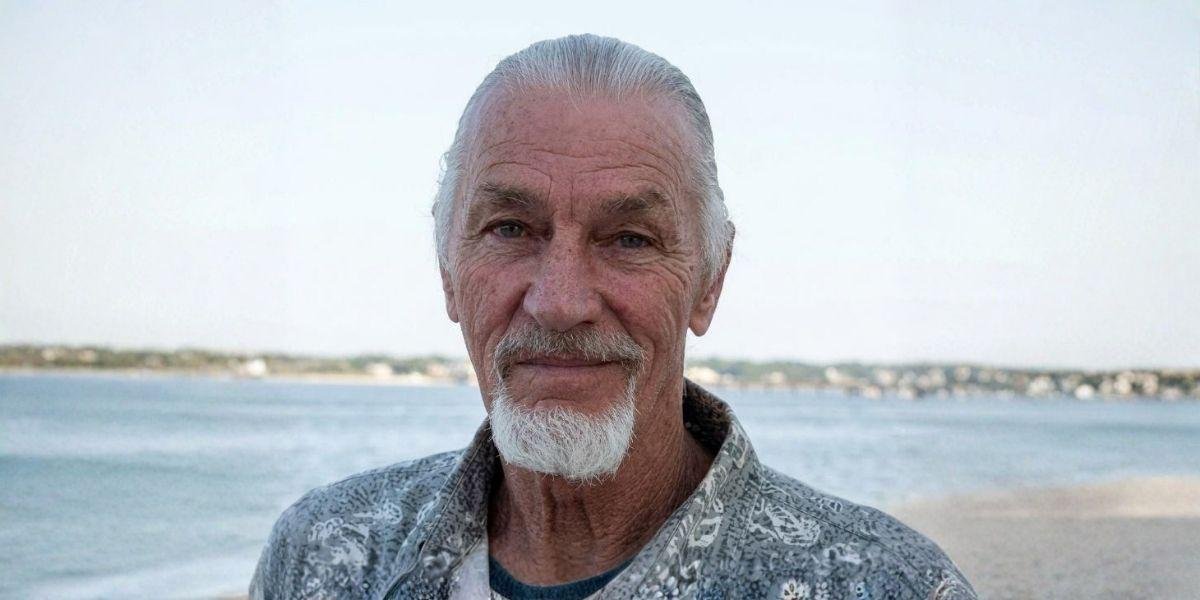
A Story Built Around the Unseen
Some stories are not built around ordinary events alone. They move through private experiences that are hard to explain from the outside. They ask readers to sit with dreams, spiritual encounters, memories, and moments that seem to reach beyond normal life.
In Craig’s story, three ideas are closely connected: dreams, near-death experience, and ancient memory. These are not treated as separate subjects. They work like parts of one inner experience. A dream first opens the door. A near-death experience gives that door deeper meaning. Ancient memory then becomes the larger world waiting behind it.
Craig’s account does not present these experiences as a theory. It presents them as lived moments. The narrative is shaped around personal experience and recovered memory, inviting readers to witness what happened rather than forcing them to agree.
Dreams That Feel Like Memory
The first part of this topic begins with dreams. In Craig’s story, dreams are not shown as simple nighttime images. They feel heavier than that. They stay. They return. They carry meaning that Craig does not fully understand at first.
One of the earliest and most important dream experiences happens when Craig is a teenager in the 1960s. He dreams that he is inside a coffin, then realizes he is dreaming inside another dream. Years later, he begins to understand that moment as something more than imagination.
This is what makes the dream material important to the article topic. The dream is not used only to create mystery. It becomes the first sign that something older is moving inside Craig’s life. At the time, he does not fully understand it. He only knows the dream does not fade like other dreams.
Craig reflects that some dreams disappear quickly, while others remain intact. He remembers the coffin dream as something that did not blur, soften, or rearrange itself over time. It stayed with him as something sealed and unresolved, waiting to be remembered.
The Old Soul and Inner Recognition
The dream leads into a deeper idea in Craig’s story: the Old Soul. Craig does not describe this as a dramatic power or a borrowed belief. Instead, he explains it as a form of memory that feels older than his present life.
The Old Soul feels like a continuity of memory that did not begin with the body. It is not something that commands or judges. It remembers. It rests under the surface until the right circumstances allow it to rise.
This idea creates the bridge between dreams and ancient memory. A dream may appear first, but the dream is only part of a much larger pattern. Craig also connects this inner recognition to déjà vu, intuition, and knowledge that feels remembered rather than learned.
Craig’s story also makes an important spiritual distinction. The Old Soul is connected to recognition. It feels like something familiar returning. The Holy Spirit, on the other hand, is connected to guidance, direction, and moral authority. This separation helps readers understand that not every spiritual feeling in Craig’s account has the same meaning.
Near-Death as a Threshold
The second major part of the topic is the near-death experience. In Craig’s story, this does not appear as a random spiritual episode. It comes after emotional pressure, loss, and a dangerous California crash.
The crash becomes a major rupture in the narrative. Craig drives through Venice Beach at high speed and crashes into a utility pole. In the moment of impact, his soul separates from his body and enters a bright white space where time seems to stop, and physical feeling disappears.
This near-death experience is important because it changes the meaning of everything that came before it. The early dream is no longer just a strange memory. The sense of the Old Soul is no longer just a quiet feeling. The crash becomes the moment where these hidden experiences take on greater weight.
For Craig, the near-death experience is not only about seeing beyond life. It is also about being stopped at a spiritual boundary. He stands before monumental steps and radiant gates, where he hears what he believes is God’s voice saying he cannot enter God’s Kingdom while intoxicated. He is then sent back into his body.
The Meaning of Being Sent Back
The near-death experience is not written as simple comfort. It is not just a peaceful vision. It carries responsibility. Craig is not shown a beautiful place and is allowed to stay. He is stopped. He is told he cannot enter in that condition. Then he returns to his body.
That is why the experience becomes a turning point. It not only shows him that something may exist beyond death. It also shows him that life carries moral weight. Survival is not treated as an accident. It becomes unfinished work.
In Craig’s story, after the crash, he feels physically damaged but spiritually changed. While hospitalized, material concerns begin to lose meaning. He senses that surviving means there is still work he does not yet understand.
This is where the narrative begins to move from near-death into responsibility. The crash does not close the story. It opens the next layer.
Ancient Memory Returns
The third part of the article topic is ancient memory. In Craig’s story, ancient memory does not appear immediately. It comes after the early dream, the spiritual framework, the crash, and the difficult period between worlds. This structure matters because the narrative does not rush into claims about ancient civilization. It builds toward them.
Central to Craig’s account is the difference between belief and memory. Spiritual experience is not framed as metaphor, and ancient knowledge is not presented as speculation. It is positioned as a lived experience recalled, not reconstructed.
This becomes clear in the later section where memory returns. Craig experiences a revelatory dream that transports him to an ancient seaport near the Nile Delta. He experiences life as part of a ruling family in a prosperous and cooperative civilization. The setting feels remembered rather than imagined.
That point is important for readers. The ancient world in Craig’s story is not presented as something he studies from a distance. It is presented as something he remembers from within.
Stone, Water, Glass, and the Pyramid
The ancient memory expands into ideas of engineering, discovery, and civilization. Craig’s story includes sections focused on stone, water, glass, living machines, and the unfinished pyramid. These sections show a remembered civilization built around cooperation, practical knowledge, and respect for natural systems.
Craig recalls ancient engineering efforts, including quarrying massive stone, designing transport systems, and solving practical problems through shared knowledge. He also remembers the discovery of glass as a turning point connected to curiosity, trade, and technology.
The pyramid itself is not treated only as a monument. In Craig’s account, it becomes a functional structure tied to water, energy, and communal survival. It is left unfinished, but that unfinished state becomes meaningful. It reflects human effort, limits, intention, and the idea that not everything important has to be complete to matter.
Why the Three Ideas Belong Together
Dreams, near-death experiences, and ancient memory may sound like separate subjects, but in Craig’s story, they are deeply connected. The dream is the first sign. The near-death experience becomes a spiritual break. Ancient memory becomes the larger truth that returns afterward.
The line between them is not clean, and that is the point. Craig’s story explores the space where a dream may feel like memory, where death may feel like a doorway, and where the past may not feel fully past.
This makes the topic engaging because it does not ask readers to solve everything. It asks them to consider what it means when an experience is too strong to dismiss, too personal to prove, and too lasting to ignore.
Where Memory Begins to Feel Older Than Life
Craig E Parks’ story leaves readers standing in a strange and thoughtful place, somewhere between what can be explained and what can only be experienced. The dreams, the near-death encounter, and the ancient memories do not feel like separate pieces of his life. They feel like signals from the same hidden source, appearing at different moments until a larger picture begins to form.
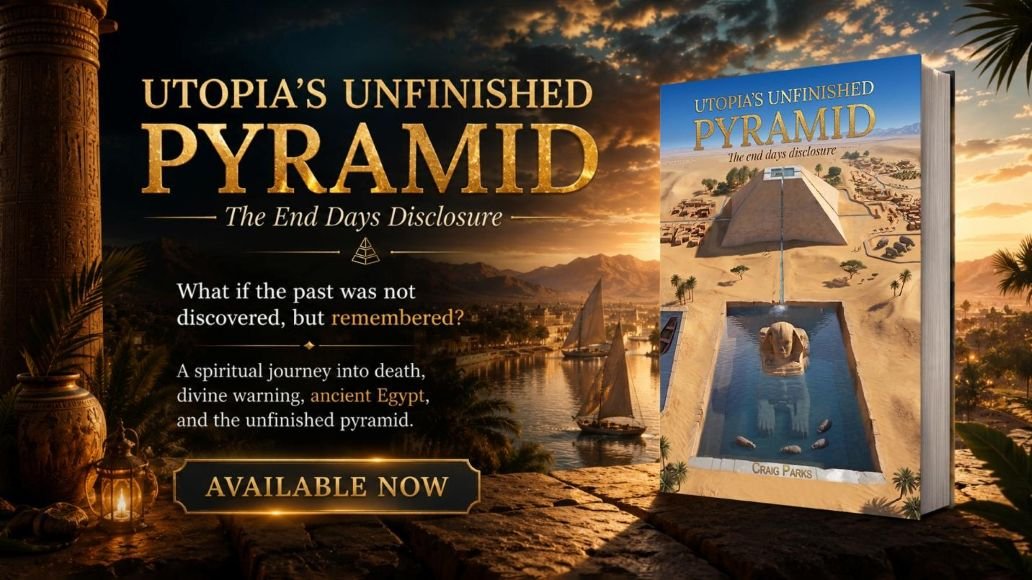
What makes this part of Utopia’s Unfinished Pyramid interesting is not that it asks readers to accept every experience without question. It gives them room to wonder. A coffin dream from youth, a blinding white space after a California crash, and later memories of an ancient civilization all come together to raise a deeper question: what if some parts of us remember more than this one lifetime?
That question is what gives the book its quiet pull. Craig’s experiences do not sit neatly inside ordinary categories. They move between dream and memory, between accident and revelation, between the present life and something much older. By the end, the reader is not simply thinking about what happened to Craig. They are thinking about memory itself, and whether the unseen parts of a life may sometimes be the most important ones.