By: Christian Smith
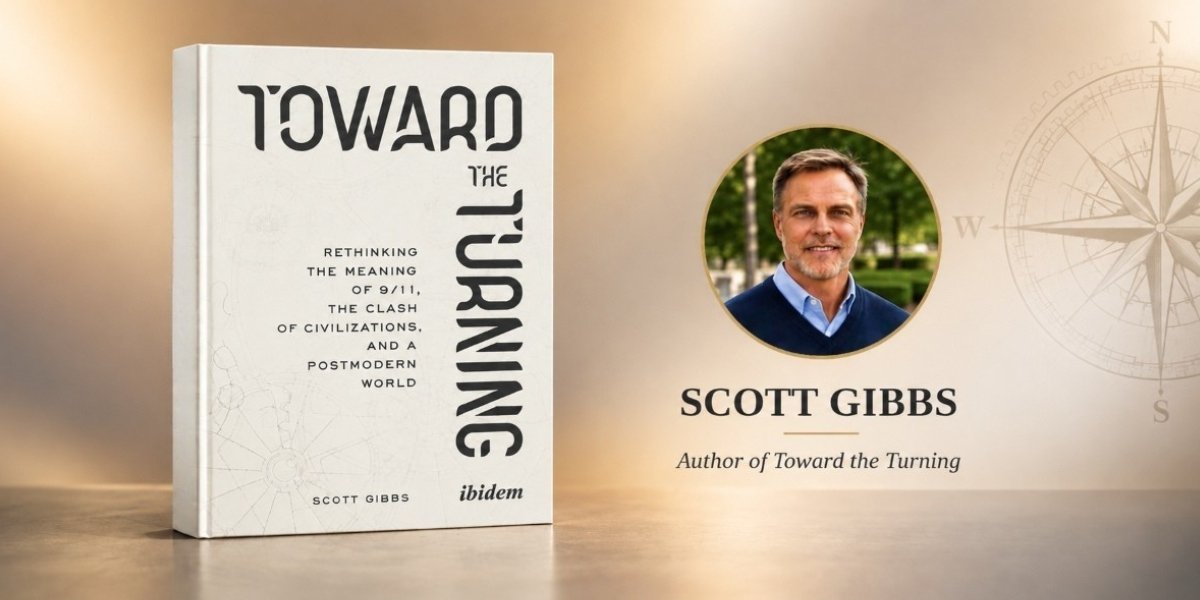
Most serious writing about the clash of civilizations and the cycles of violence that have defined so much of the post-9/11 world arrives with an implicit or explicit assignment of responsibility that reflects the framework of the tradition or ideology from which the author is writing. Scott Gibbs has written the rare and genuinely important book that refuses that assignment, not from a position of moral relativism or false balance but from a position of genuine philosophical rigor, arguing that the structural dynamics that produce civilizational conflict are present in all the identity systems involved and that any analysis that exempts its own tradition from those dynamics is participating in the very pathology it claims to diagnose.
That argument requires both intellectual courage and intellectual preparation to make credibly, and Gibbs brings both in abundance. His work spans philosophy, religious studies, psychology, and political analysis, and the breadth of that preparation gives the book an unusual capacity to hold the complexity of the subject without reducing it to the familiar binaries that most treatments of civilizational conflict ultimately fall back on. The examination of both traditional religious identity systems and modern secular ones, treated with equal rigor and equal compassion, is itself one of the book’s most significant contributions. It insists that the problem is not located in any particular tradition but in the specific way that identity systems of all kinds can harden from sources of meaning into instruments of exclusion and violence.
The concept of the deadly dance that runs through the book is one of those genuinely illuminating metaphors that reorganizes a great deal of what you already knew about civilizational conflict into a more coherent and more useful picture. Gibbs presents conflict as a deadly dance in which identities, fears, grievances, and reactions continually shape one another. That framing captures something essential about the self-reinforcing and self-escalating quality of civilizational conflict that purely causal accounts of violence consistently miss. It opens the possibility of a different kind of intervention, one aimed not at winning the dance but at stepping out of it entirely.
The turning Gibbs calls for in the book’s conclusion is the most important and most carefully earned element of the argument, because it refuses the temptation of offering a new ideology or a political program as the solution to a problem whose roots are deeper than ideology or politics can reach. What he is pointing toward is a corrective understanding of the self and its relationship to others, grounded in the philosophical insights he has built toward across the book’s full length, that makes genuine human encounter possible where deadly dance has been the default.
As the 25th anniversary of September 11, 2001 approaches in 2026, the questions that day opened about identity, belonging, fear, and the conditions that produce conflict have only grown more urgent and more difficult to hold honestly. Toward the Turning does not use that anniversary as a platform for any particular political conclusion. It uses the deeper patterns it revealed as a window into something structural and human and recurring, something that existed before that date and will continue long after any single event fades from immediate memory.
Toward the Turning is the book that the current civilizational moment requires: serious, rigorous, morally urgent, and genuinely original in the specific and important way that only comes from a thinker who has been preparing this argument for decades and has finally found the courage and the form to deliver it completely.
If the frameworks currently governing public discourse about civilizational conflict, the cycles of violence defining the postmodern world, and the deeper psychological and philosophical structures underneath both have been feeling inadequate to the actual complexity of what is happening, Toward the Turning by Scott Gibbs is the book that replaces those frameworks with something genuinely more rigorous, more honest, and more useful. Head over to Amazon and get your copy today to find out what it looks like when a serious thinker finally steps out of the deadly dance entirely.