
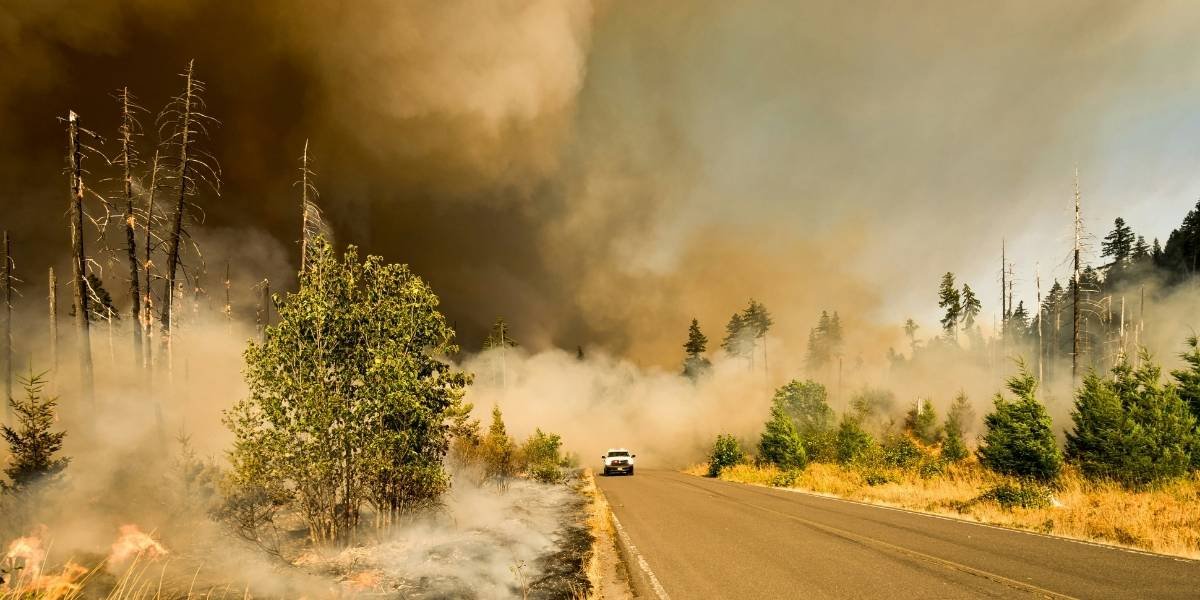
UC Davis researchers have received a five-year, $14.05 million federal grant to investigate the health effects of wildfire smoke exposure. The project will examine cardiovascular and lung health, immune responses, biological mechanisms and social factors, with investigators from UC Davis and UC San Diego participating.
Key Takeaways
- The National Heart, Lung, and Blood Institute awarded UC Davis $14,050,840 over five years for the research program.
- The project will study the effects of wildfire smoke on cardiovascular and pulmonary health.
- The research team includes 22 investigators from UC Davis and collaborators from the UC San Diego School of Medicine.
- Four research projects will examine immune cells, cardiovascular inflammation, epigenetic processes, psychosocial stress and social vulnerability.
- The program will combine human clinical studies with controlled smoke-exposure models and molecular and epigenetic research.
UC Davis Receives $14.05 Million Federal Research Grant
The National Heart, Lung, and Blood Institute, part of the National Institutes of Health, awarded UC Davis a five-year Program Project Grant totaling $14,050,840. The federal award supports a multidisciplinary research program called WE-CAIR, short for Wildfire Exposure: Cardiovascular and Airway Inflammation Research.
The grant includes $8,993,941 in direct costs. UC Davis announced the research funding on September 15, 2026, through its health research division.
Angela Haczku, director of the UC Davis Lung Center, serves as the contact program director for WE-CAIR. The program is designed to investigate both biological mechanisms associated with wildfire smoke exposure and factors that may contribute to differences in health outcomes among people exposed to smoke.
The research will examine several parts of the response to wildfire smoke rather than concentrating on a single health outcome. Its projects cover immune responses, cardiovascular inflammation, airway inflammation, epigenetic regulation, psychosocial stress and social vulnerability.
California is also developing policies addressing the effects of wildfire smoke and contamination. Separate state legislation would establish standards for testing and cleaning wildfire-contaminated homes and schools, including requirements concerning lead, asbestos and other substances.
Wildfire Smoke Research Focuses on Cardiovascular and Lung Health
WE-CAIR will investigate the cardiovascular and pulmonary effects associated with wildfire smoke exposure. UC Davis said the project addresses both short-term effects and longer-term health consequences that remain less understood.
One research project will examine group 2 innate lymphoid cells, known as ILC2s. According to UC Davis, previous work by the Haczku laboratory found that these immune cells can produce the inflammatory cytokines IL-13 and IL-17 when triggered by wildfire smoke.
A second project will study the aryl hydrocarbon receptor, or AhR, an environmental sensor involved in the body’s response to substances encountered through environmental exposure. Researchers will examine its role in wildfire-smoke-related cardiovascular inflammation.
A third project will investigate TET1, an epigenetic regulator that researchers are studying for its potential role in protecting against airway and cardiovascular inflammation. The work will examine biological mechanisms that may influence how the body responds to smoke exposure.
The research also includes factors beyond biological processes. A fourth project will examine how psychosocial stress and social vulnerability influence the health effects associated with wildfire smoke exposure.
Cardiovascular and Airway Research
The program’s cardiovascular and airway work will examine inflammation in both systems. The researchers will use several research approaches to connect exposure to biological responses and health outcomes.
The research team includes investigators affiliated with the UC Davis School of Medicine, Center for Health and the Environment, College of Agricultural and Environmental Sciences, Weill School of Veterinary Medicine, College of Engineering, Air Quality Research Center and National Biomedical Research Institute.
The work is part of a wider set of California research and response efforts focused on wildfire impacts. State investments have also included wildfire detection and emergency-response technology, including the expansion of aerial firefighting resources.
UC Davis and UC San Diego Researchers Join the Study
The WE-CAIR program includes 22 investigators from UC Davis and collaborators from the UC San Diego School of Medicine. The participating researchers bring expertise from medicine, environmental health, agriculture, veterinary medicine, engineering, air-quality research and related fields.
UC Davis lists Keith Bein, Clare Cannon, Hong Ji, Janine LaSalle, Miriam Nuño, Jill Silverman, Christoph Volker, Barton Wise and Amir Zeki among its co-investigators. UC San Diego collaborators include Praveen Akuthota and Rajat Suri.
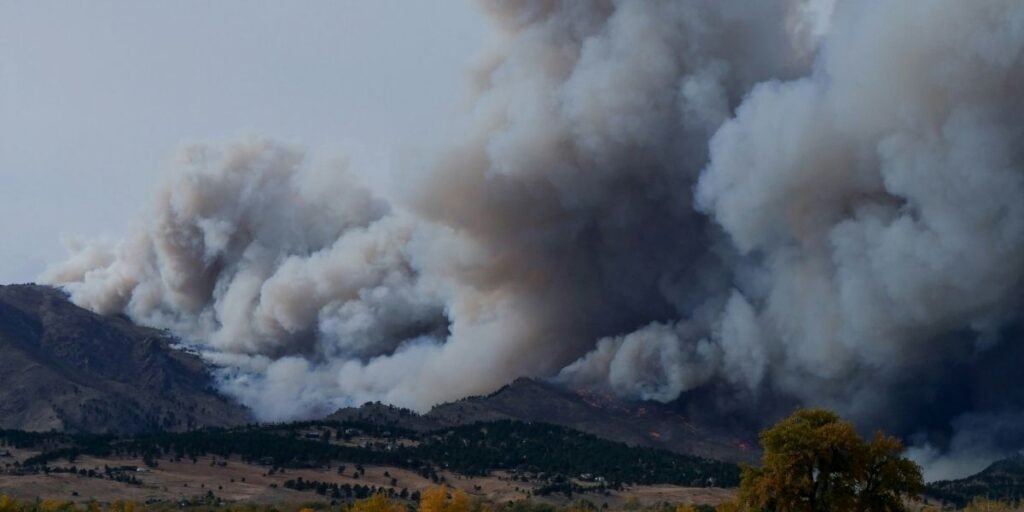
The program combines multiple research disciplines within one grant. Its structure includes bioinformatics, epigenetics, clinical research and controlled mouse exposure models. Data from the different components will undergo systems-level integration.
The clinical component will allow researchers to examine wildfire smoke exposure in human participants, while controlled exposure models will allow specific biological responses to be studied under defined research conditions. Molecular and epigenetic research will provide another layer of analysis.
This structure allows the research team to study wildfire smoke from exposure through biological response and health effects. The individual projects address separate mechanisms while operating within the larger WE-CAIR research program.
UC Davis has also received recent federal support for other areas of medical research. In August, its Comprehensive Cancer Center received nearly $18 million over five years following renewal of its National Cancer Institute designation.
Research Examines Biological Responses to Smoke Exposure
The UC Davis project will use molecular and cellular research to examine how wildfire smoke can trigger inflammatory responses. The ILC2 project, for example, focuses on immune cells and their production of inflammatory cytokines following exposure.
The research involving AhR will examine a separate pathway connected to cardiovascular inflammation. The TET1 project will investigate epigenetic regulation in relation to airway and cardiovascular inflammation.
Epigenetics examines changes that affect how genes function without changing the underlying DNA sequence. Within WE-CAIR, researchers will use epigenetic analysis alongside other approaches to examine biological responses to wildfire smoke exposure.
The program will also examine psychosocial stress and social vulnerability. Those factors are being studied alongside biological mechanisms to assess their relationship with health effects associated with wildfire smoke exposure.
The research does not treat smoke exposure as a single biological process. Instead, the four projects address immune responses, cardiovascular inflammation, airway protection and social and psychological factors within the same research framework.
Immune and Molecular Responses
The program’s molecular research is supported by dedicated bioinformatics and epigenetics components. Researchers will integrate information from different parts of the study rather than analyzing each research area in isolation.
The grant supports investigation rather than a completed finding. Researchers are using the five-year project to examine mechanisms that may explain differences in health responses following wildfire smoke exposure.
Five-Year Project Expands Investigation Into Wildfire Smoke Risks
The five-year funding period gives UC Davis and its collaborators a defined period to conduct the WE-CAIR research program across its clinical, experimental, molecular and epigenetic components. The National Heart, Lung, and Blood Institute is providing the funding through award P01 HL179398.
The research will include human clinical studies and controlled wildfire smoke exposure models. UC Davis said the program will also use molecular and epigenetic research cores, with the resulting information integrated through systems-level analysis.
The program’s research questions include the biological mechanisms behind smoke-related health effects and the reasons some individuals may experience different responses to exposure. The researchers will also examine how psychosocial stress and social vulnerability relate to those effects.
UC Davis has previously been involved in research examining wildfire smoke and health. A 2026 study involving UC Davis researchers found an association between wildfire-smoke-dominated fine particulate matter exposure and persistent respiratory illness and symptoms in adults from a Northern California community affected by wildfire.
That earlier study examined respiratory outcomes after wildfire exposure, while WE-CAIR is structured around a broader set of cardiovascular, airway, immune, molecular and social factors. The new grant therefore provides funding for a separate, multidisciplinary research program focused on understanding mechanisms and health responses.
WE-CAIR is funded through the National Institutes of Health’s National Heart, Lung, and Blood Institute. The five-year award totals $14,050,840, with $8,993,941 identified as direct costs.
Frequently Asked Questions
How much funding did UC Davis receive for wildfire smoke research?
UC Davis received a five-year federal grant totaling $14,050,840. The funding comes from the National Heart, Lung, and Blood Institute within the National Institutes of Health.
What health effects will the UC Davis wildfire smoke study examine?
The study will examine cardiovascular and pulmonary health effects associated with wildfire smoke exposure. Its research also covers immune responses, airway and cardiovascular inflammation, epigenetic processes, psychosocial stress and social vulnerability.
Which universities are participating in the wildfire smoke research?
The program includes 22 investigators from UC Davis and collaborators from the UC San Diego School of Medicine. Researchers from multiple UC Davis schools, colleges and research centers are also participating.
How long will the UC Davis wildfire smoke research project last?
The WE-CAIR program is funded for five years through a National Heart, Lung, and Blood Institute Program Project Grant.
Which federal agency funded the UC Davis wildfire smoke study?
The National Heart, Lung, and Blood Institute, part of the National Institutes of Health, is funding the project under award P01 HL179398.