
A great book is built long before it reaches a bookstore shelf. While many authors focus on cover design, publishing platforms, and marketing strategies, a successful book often starts with something less visible: professional editing.
A manuscript can have a powerful story or valuable information, but without proper structure, clarity, and refinement, readers may struggle to connect with it. This is why professional book editing services play a critical role in transforming an early draft into a polished, reader-ready publication.
City Light Publishers approaches editing as more than simply correcting grammar mistakes. The company separates the editorial process into specialized stages, helping authors improve their manuscripts through structured feedback, refinement, and preparation for publication.
Why Professional Book Editing Matters
Many readers do not leave a book because of a missing comma or a spelling mistake. They often stop reading because the story feels slow, unclear, repetitive, or difficult to follow.
Effective book editing services address these deeper challenges by improving:
• Story structure
• Chapter organization
• Reader engagement
• Sentence flow
• Point-of-view consistency
• Logical progression of ideas
Editing is often invisible when done correctly, but it has a significant impact on how professional and enjoyable a book feels to readers.
Four Essential Stages of the Editing Process
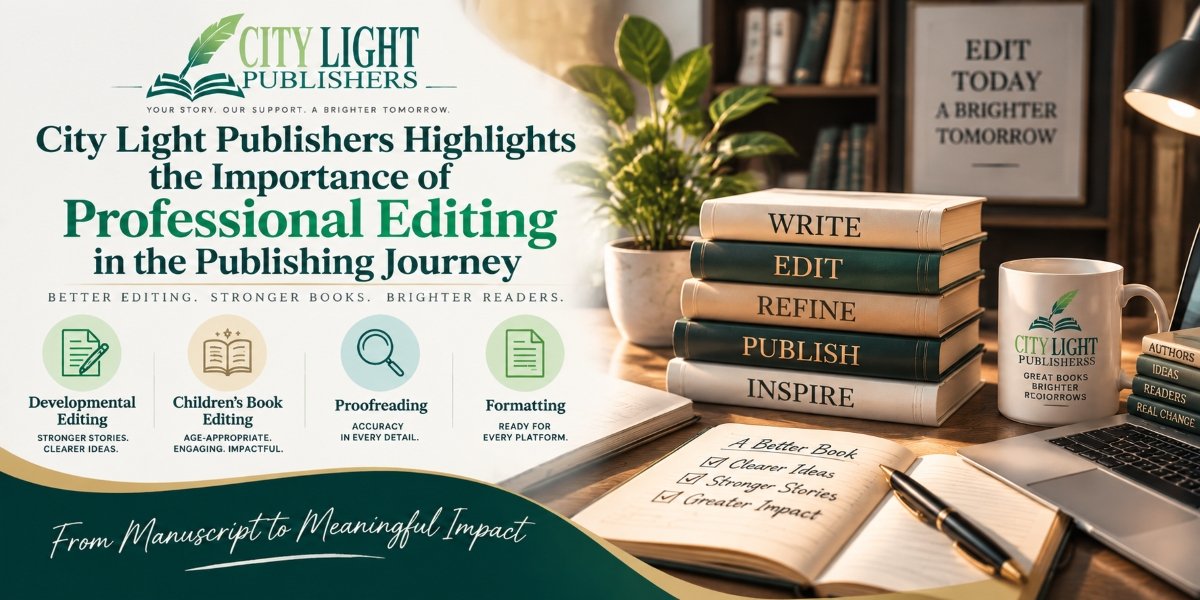
City Light Publishers organizes its editorial services into four specialized areas, each designed to address a different stage of manuscript development.
1. Developmental and Line Editing: Improving the Foundation
The first stage focuses on the overall quality and direction of a manuscript.
Developmental editing services examine the bigger elements of a book, including:
• Chapter structure
• Story pacing
• Character development
• Argument organization in nonfiction
• Overall manuscript flow
For fiction authors, this process may involve improving narrative consistency and strengthening the reader experience. For nonfiction writers, editors help evaluate whether ideas are introduced clearly and supported effectively.
This stage focuses on improving what the book is, not just correcting how it is written.
2. Children’s Book Editing Requires Specialized Expertise
Children’s books require a unique editorial approach. A successful children’s book must consider factors such as:
• Age-appropriate vocabulary
• Sentence length
• Page-turn rhythm
• The connection between text and illustrations
Children’s book editing services require editors who understand how young readers engage with stories. The skills needed for a picture book can differ significantly from those needed for adult fiction or nonfiction.
3. Proofreading: The Final Quality Check
After major revisions are complete, proofreading focuses on the final details before publication.
Book proofreading services help identify:
• Spelling errors
• Grammar issues
• Punctuation mistakes
• Formatting inconsistencies
• Style variations
A professional proofreader understands that this stage is about accuracy and consistency rather than rewriting the author’s voice.
4. Book Formatting: Preparing for Publication
Once a manuscript is edited, it must be prepared for different reading formats.
Book formatting services ensure that a manuscript works properly as:
• A printed book interior
• An EPUB file
• A Kindle edition
Proper formatting improves readability and helps create a professional experience for readers across different platforms.
The Importance of Editing in the Correct Order
One common mistake among independent authors is completing editing steps in the wrong order. For example, proofreading a manuscript before making major structural changes can create unnecessary revisions later.
A successful editorial workflow usually follows a sequence:
• Developmental editing
• Line editing
• Proofreading
• Formatting
Following this process helps authors avoid repeated corrections and ensures that each stage improves the previous one. City Light Publishers’ editorial structure reflects this organized approach to manuscript preparation.
Human Editorial Judgment Beyond Technology
Modern writing tools can identify many technical issues, such as grammar errors and sentence problems. However, technology cannot replace the judgment of an experienced editor.
Professional editors evaluate elements that automated tools often cannot recognize, including:
• Whether a story loses momentum
• Whether ideas appear in the right place
• Whether a scene feels unnecessary
• Whether a book’s message is clearly communicated
City Light Publishers highlights the value of editors with subject expertise who can provide informed guidance based on the type of manuscript being developed.
What Authors Should Look for in an Editing Partner
Before selecting an editing company for authors, writers should ask important questions about the process.
Authors should consider:
• Can they receive a sample edit from their own manuscript?
• What type of editing is included?
• Are tracked changes provided?
• Will they receive an editorial letter explaining revisions?
• How many editing rounds are included?
• What happens if additional revisions are needed?
Clear communication and defined expectations help create a stronger collaboration between authors and editors.
Editing as an Investment in Book Quality
Professional editing is not only about improving grammar. It helps protect a book’s reputation after publication.
A manuscript released without proper editing may receive reader complaints about errors, unclear sections, or inconsistent presentation. While corrections can be made later, first impressions often remain important.
Investing in professional manuscript editing services allows authors to address potential issues before their book reaches readers.
Helping Authors Create Stronger Books
Publishing a book requires more than completing a manuscript. The journey involves refining ideas, improving readability, preparing the file, and ensuring the final product meets professional standards.
City Light Publishers treats editing as an essential part of the publishing process, offering structured editorial services that help authors strengthen their manuscripts before publication.