

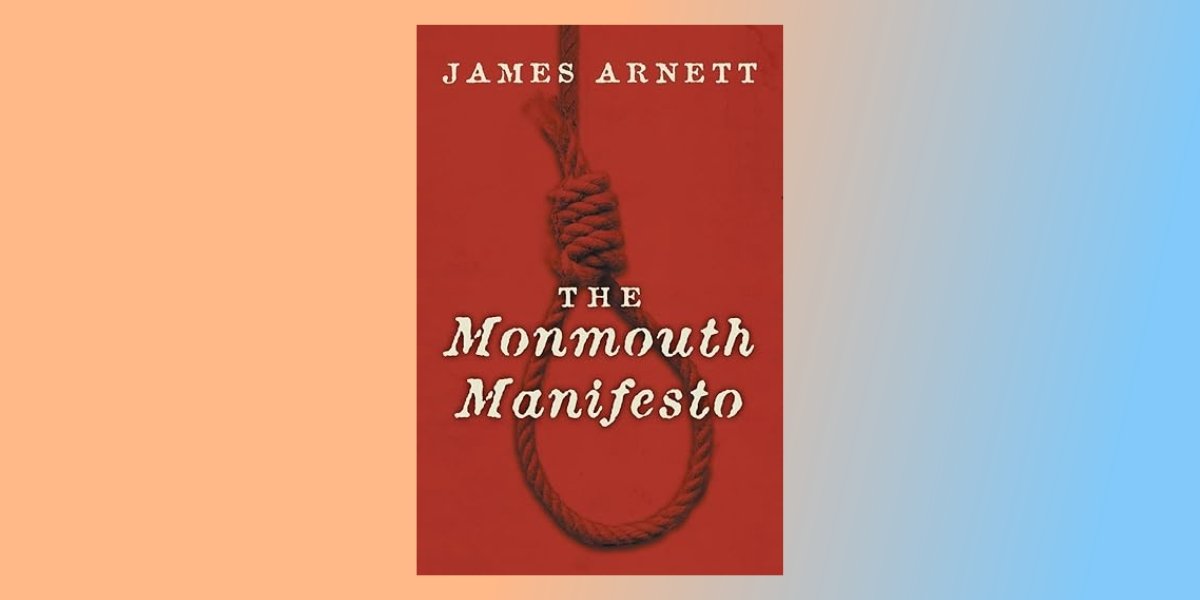
James Arnett’s historical fiction explores the American Revolution through the lens of Loyalists, the colonists who remained loyal to the British Crown during the conflict. The Monmouth Manifesto centers on that divided reality, when neighbors and even families could end up on opposing sides of the same war. Loyalists made up a meaningful share of the colonial population, yet their stories are often less visible in popular retellings.
For readers interested in a character-driven way into that perspective, The Monmouth Manifesto frames the era as a lived experience, not just a set of battles and famous names. The story emphasizes moral pressure, local reprisals, and the long shadow of wartime choices.
The Monmouth Manifesto and the Loyalist Lens
At its core, The Monmouth Manifesto follows two New Jersey farmers who become soldiers in a Loyalist regiment: Richard Lippincott, a Quaker shaped by a tradition of restraint, and James Moody, an Anglican whose confidence and daring pull him toward risk. Their bond forms under stress, as they move through pitched fighting, guerrilla tactics, and the harsh logic of retaliation that can take hold in civil conflict.
Arnett’s approach keeps the focus on personal cost. Farms can be lost, communities can fracture, and “winning” and “losing” can feel less like slogans and more like consequences that land at the kitchen table. This emphasis aligns with what many historians stress about the Revolutionary period: it was not only an uprising against Britain, but also a conflict inside towns, churches, and households.
Real people, hard choices, and the Asgill Affair
One of the historical flashpoints running through the novel is the Huddy Asgill affair, an episode that escalated from a local killing into a diplomatic headache. After the Patriot officer Joshua Huddy was executed, George Washington approved a retaliatory plan that put a British officer, Captain Charles Asgill, in danger, drawing attention from French officials and adding international pressure during an already fragile moment.
The incident is closely tied to Loyalist officer Richard Lippincott, who became central to the controversy and faced a British court-martial process as events unfolded. Arnett uses this historical dilemma to spotlight how quickly a cycle of reprisals can grow, and how leaders and ordinary soldiers alike can be forced into choices that leave no clean moral exit.
Audiobook narration and listening experience
For listeners, The Monmouth Manifesto also exists in audiobook form, narrated by Simon Vance, a widely recognized voice in modern audiobook publishing.
Historical Context Behind the Story

Arnett’s novel is rooted in real places and recognizable turning points, including New Jersey’s central role in Revolutionary era campaigning. The state saw persistent military movement, shifting control, and contested loyalties that made everyday life uncertain.
The Battle of Monmouth in June 1778, fought in New Jersey, is often described as an intense, sustained engagement during the war, and it remains a reference point for understanding the region’s strategic pressure. By drawing on this setting, Arnett places his characters in a landscape where the stakes are physical, immediate, and rarely abstract.
Loyalists in the Revolution
The term “Loyalist” can sound simple, but the reality was varied. Some people were loyal for cultural, religious, economic, or legal reasons, while others feared instability more than imperial rule. Britannica summarizes Loyalists as colonists loyal to Great Britain during the American Revolution, a definition that helps ground the novel’s premise in an established historical frame.
This matters because the Loyalist experience was not a single story. It included service in provincial units, community suspicion, property loss, and postwar displacement. In fiction, that complexity becomes a way to explore how identities form under pressure and how “loyalty” can mean different things depending on what a person is trying to protect.
James Arnett’s Approach to Historical Fiction

A notable part of Arnett’s background is his earlier career in law and business, including senior executive leadership roles. In narrative terms, that experience can shape how a writer handles documents, formal decisions, and institutional tension, all of which matter in a story where trials, orders, and political calculations sit beside fear and friendship.
Arnett has described being drawn to the Richard Lippincott story after encountering only a thin outline and then finding deeper contradictions in how different groups judged the same man. That observation fits the book’s broader theme: reputations during wartime can change depending on who is telling the story and what they stand to lose.
Bean Fate and a Different Historical Setting
Readers who want to see how Arnett handles a different era may look to Bean Fate, his debut historical novel. It centers on a Prohibition-era murder and places its intrigue in a borderland environment shaped by smuggling and local rumor. On the author’s site, the book is presented as a work inspired by a real incident, with commentary from historians and public figures who highlight its period detail and narrative drive.
Together, the two novels show an interest in overlooked corners of history, where official narratives can leave gaps and fiction can explore the human dimensions of what records do not fully capture.
Historical fiction can be a bridge between scholarship and imagination, especially when it treats the past as complicated rather than tidy. The Monmouth Manifesto leans into that complexity by following Loyalist characters through community fractures, retaliation politics, and the uneasy space between duty and survival, while also inviting readers to revisit what they think they know about the Revolution’s internal divisions
Disclaimer: The views and events depicted in The Monmouth Manifesto are fictionalized for narrative purposes. While inspired by historical events, the novel takes creative liberties to explore the complex dynamics of the American Revolution from the Loyalist perspective.