

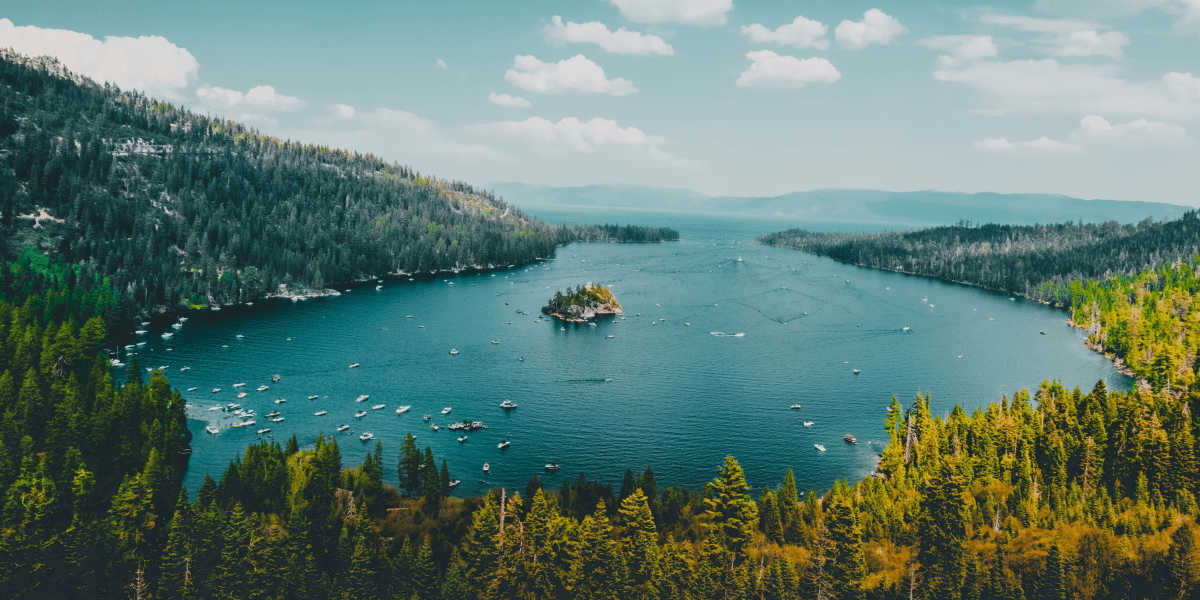
Lake Tahoe is a freshwater lake located in the Sierra Nevada, straddling the border of California and Nevada. At 6,225 feet above sea level, it is the largest alpine lake in North America and the second deepest in the United States, reaching depths of 1,645 feet. The lake covers 191 square miles, with more than 70 miles of shoreline that includes sandy beaches, rocky coves, and forested slopes.
The lake was formed about two million years ago through geologic block faulting, with its modern shape influenced by glacial activity during the ice ages. Its clear waters and surrounding mountain views have made it a destination for recreation and tourism throughout the year.
Lake Tahoe’s watershed is largely protected, with more than 75 percent managed as national forest land. This protection has helped preserve the lake’s clarity, though environmental pressures remain a concern.
Indigenous Heritage and Early Settlement
Long before European settlement, the Washoe people lived around Lake Tahoe, calling it “Da ow a ga,” meaning “edge of the lake.” They relied on the lake’s resources for fishing, hunting, and gathering, and considered the area sacred. The Washoe maintained a deep connection to the land for thousands of years.
In the 19th century, pioneers and prospectors arrived during the Gold Rush, transforming the region. Logging operations expanded to supply timber for Nevada’s Comstock mines, leading to widespread deforestation. The influx of settlers also displaced the Washoe, whose traditional way of life was disrupted.
Despite these changes, the Washoe people remain an important part of Tahoe’s cultural heritage. Efforts to honor their history include educational programs and collaborations with local organizations to preserve traditional knowledge.
Tourism and Economic Development
By the late 19th century, Lake Tahoe began attracting visitors seeking recreation and retreat. Wealthy families built summer estates, while hotels and resorts catered to travelers arriving by stagecoach and later by automobile. The completion of highways in the mid‑20th century made the lake more accessible to a wider audience.
The 1960 Winter Olympics in nearby Squaw Valley (now Palisades Tahoe) brought international attention to the region. This event helped establish Tahoe as a premier destination for skiing and winter sports, complementing its summer appeal for hiking, boating, and fishing.
Tourism remains central to the local economy. Both the California and Nevada sides of the lake host resorts, casinos, and recreational facilities. Seasonal visitors contribute significantly to the region’s revenue, though this reliance on tourism also creates challenges for housing, infrastructure, and environmental management.
Environmental Challenges
Lake Tahoe is known for its water clarity, but this clarity has declined over time due to pollution, runoff, and development. According to the Tahoe Fund, conservation efforts began as early as the late 19th century in response to logging and fires. Attempts to designate the basin as a national park were unsuccessful, but state and federal agencies gradually increased protections.
Today, the Tahoe Regional Planning Agency coordinates efforts between California and Nevada to manage growth and protect the lake. Programs focus on reducing stormwater runoff, restoring wetlands, and limiting development in sensitive areas. These measures aim to preserve water quality and protect wildlife habitats.
Climate change adds new pressures, including warmer water temperatures, reduced snowpack, and increased wildfire risk. These factors threaten both the environment and the tourism economy that depends on it.
Recreation and Outdoor Activities
Lake Tahoe offers year‑round recreation. In summer, visitors enjoy swimming, kayaking, paddleboarding, and sailing. The surrounding trails provide opportunities for hiking and mountain biking, with routes ranging from short walks to multi‑day treks.
Winter brings skiing and snowboarding at resorts such as Heavenly, Northstar, and Palisades Tahoe. Snowshoeing and cross‑country skiing are also popular, offering quieter ways to experience the snowy landscape.
Fishing is another draw, with species such as mackinaw trout and kokanee salmon found in the lake. Regulations are in place to maintain fish populations and protect the ecosystem.
Cultural and Community Life
Beyond recreation, Lake Tahoe supports a vibrant cultural community. Local festivals celebrate art, music, and heritage, while museums and visitor centers highlight the region’s history. The influence of both California and Nevada is visible in the mix of attractions, from ski lodges to casino resorts.
Communities around the lake, including South Lake Tahoe, Tahoe City, and Incline Village, balance the needs of residents with the demands of tourism. Seasonal fluctuations in population create challenges for housing and services, but also bring opportunities for cultural exchange.
The Washoe Tribe continues to play a role in preserving cultural traditions. Educational programs and partnerships with local organizations help ensure that their history remains part of Tahoe’s identity.
Preservation and the Future
Efforts to protect Lake Tahoe continue through collaboration between state governments, federal agencies, nonprofits, and local communities. Restoration projects focus on improving water clarity, reducing wildfire risk, and managing sustainable tourism.
Public awareness campaigns encourage visitors to minimize their environmental impact, such as reducing litter and supporting conservation initiatives. These efforts are essential to maintaining the lake’s natural beauty for future generations.
Lake Tahoe’s future depends on balancing growth with preservation. By addressing environmental challenges while supporting local economies, the region can continue to thrive as both a natural treasure and a cultural hub.


