
By: Elena Mishkin
As wildfires grow in intensity and frequency across the United States, they have become not only an environmental concern but a national safety and sustainability challenge. From threats to human life and agriculture to long-term ecological damage, wildfire risk now intersects with climate change, public infrastructure, and technological preparedness. Working at this intersection is Shaoheng Zhou, an AI expert and innovator who actively contributes to wildfire-related research and serves as a judge for major international hackathons focused on disaster response and climate resilience.
One of the most high-profile events Zhou participated in was the United Nations “Reboot the Earth” Hackathon, hosted in November 2025 by the UN Office of Information and Communications Technology (OICT) and the Baskin School of Engineering at the University of California, Santa Cruz. As the first “Reboot the Earth” hackathon held on the U.S. West Coast, the event brought together developers, students, researchers, and industry professionals to build open-source, AI-powered solutions addressing the climate crisis, with a special focus on wildfire detection, response, and impact in California.
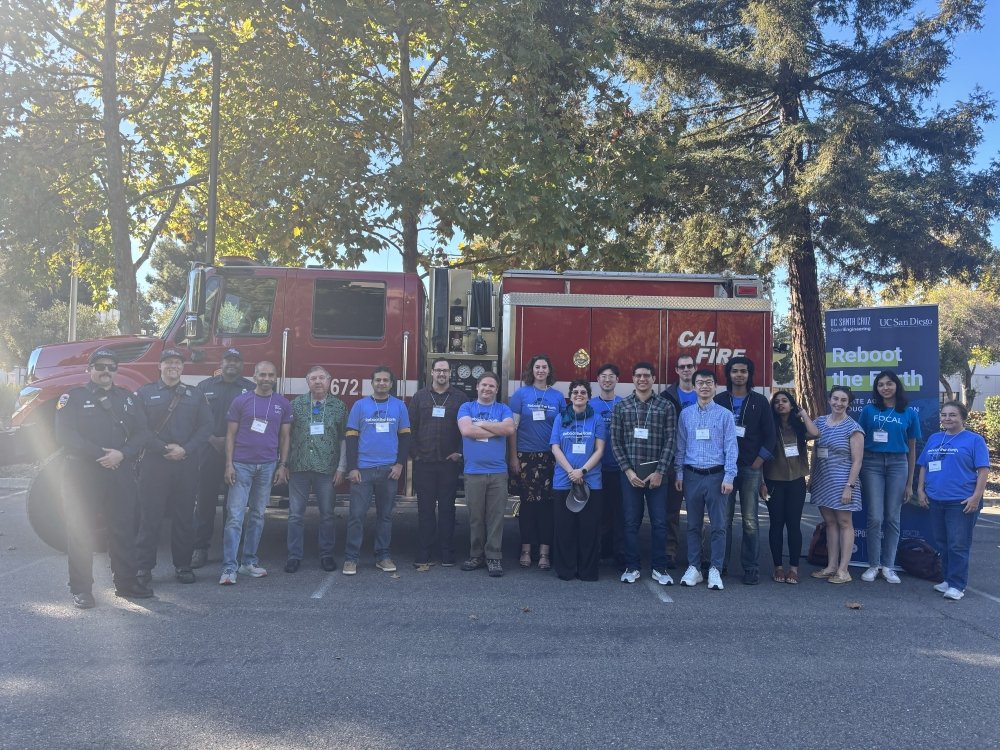
What made the event particularly distinctive was its close integration with real-world emergency response expertise. Zhou served as a judge alongside firefighters from the California Department of Forestry and Fire Protection (CAL FIRE), evaluating projects that aimed to become “digital public goods” for communities affected by wildfire risk.
“Wildfires are no longer isolated natural disasters,” Zhou said. “They have become a systemic risk affecting public safety, environmental sustainability, and regional resilience. It is critical that technological innovation is grounded in the realities faced by first responders and emergency managers.”
Organized with the support of the UC Santa Cruz Open Source Program Office, the hackathon encouraged participants to leverage open data, artificial intelligence, and cloud-based platforms to create deployable tools for early detection, situational awareness, evacuation planning, and resource coordination. Winning teams would go on to receive six months of post-event mentorship from UN and industry partners to scale their solutions for real-world use.
For Zhou, judging alongside CAL FIRE professionals added a powerful operational dimension to the evaluation process. “The firefighters consistently brought the conversation back to conditions on the ground—limited visibility, time pressure, infrastructure failures, and human safety,” he noted. “Their perspective ensured that every promising idea was examined not only for technical elegance, but for reliability, interpretability, and usability in extreme situations.”
As an AI researcher, Zhou is also actively engaged in collaborative work with academic institutions on disaster response and wildfire-related technologies. While specific studies are still under peer review, his research broadly explores how machine learning, large-scale data integration, and predictive modeling can support early-warning systems, fire-spread analysis, and decision-support platforms for emergency operations.
“AI can fundamentally reshape how we prepare for and respond to wildfires,” Zhou said. “From satellite and sensor data fusion to real-time risk forecasting, intelligent systems can help responders make faster, better-informed decisions. But technology must be designed with the user in mind—the firefighters, emergency planners, and communities who depend on it under life-or-death conditions.”
This philosophy guided his approach as a judge at the UN hackathon. Zhou emphasized that the most compelling teams were those that demonstrated both technical rigor and deep awareness of social impact. “In disaster scenarios, innovation is meaningful only if it can be trusted, deployed, and understood by the people on the front lines,” he said. “Human-centered design and system robustness are just as important as algorithmic performance.”
Beyond the United Nations event, Zhou has served as a judge for several major innovation platforms, including CalHack 12.0, one of the largest collegiate hackathons in the United States; the Globee Awards for Impact; and LiveAI Best Coast 2025. Across these venues, he has consistently advocated for technology that addresses real societal needs, particularly in the context of climate resilience and public safety.
The global scope of the Reboot the Earth initiative—previously hosted in cities such as New York, Rome, Kigali, and Doha—also underscored for Zhou the international dimension of wildfire and climate challenges. “Climate-driven disasters are a shared global problem,” he said. “What we learn in California can inform solutions elsewhere, and vice versa. Platforms like this hackathon create an ecosystem where students, researchers, industry leaders, and public agencies can collaborate toward a common mission.”
By bridging academic research, AI innovation, and hands-on evaluation alongside CAL FIRE and the United Nations, Shaoheng Zhou exemplifies a new generation of technologists working at the frontier of national importance. His work highlights how interdisciplinary collaboration and responsible AI can play a vital role in strengthening society’s ability to anticipate, withstand, and respond to one of the most pressing challenges of our time.